

Imagine a place where the air is so pure it tastes sweet and the heavy scent of moss and wild orchids fills your lungs. This is not a fairy tale found in a dusty book; it is Silent Valley National Park, a hidden treasure located in the Nilgiri Hills of Kerala, India. While many tourists flock to the crowded beaches of Varkala or the backwaters of Alleppey, travelers who truly love nature are choosing this “Silent” mystery. This park is one of the last places on Earth where the tropical rainforest remains exactly as it was millions of years ago, untouched by the frantic pace of modern human development. In 2012, UNESCO recognized its immense biological value by naming it a World Heritage Site, placing it in the same league as the Galapagos Islands or the Amazon Rainforest.
When you enter the park, you are stepping back into a prehistoric era. The forest floor is thick with leaf litter, and giant ferns reach toward a canopy so dense that sunlight only hits the ground in shimmering patches. This isn’t just a park; it is a fortress of biodiversity that has survived for eons. Scientists believe these hills served as a refuge for species during past climate changes, allowing ancient life forms to survive. For the traveler, this means walking through a living time capsule. The experience is humbling, reminding us that there are still corners of the world that belong entirely to nature. It is a place where humans are merely quiet observers of a grand, ancient design that has functioned perfectly without our interference for countless generations.
Why Western Travelers Love This True Wilderness
Most tropical forests are filled with the loud, rhythmic “chirping” of cicadas that can sometimes be deafening. However, in Silent Valley National Park, these noisy insects are mostly absent, leading to a unique phenomenon that gave the park its name. This creates an eerie, profound silence that is perfect for a “digital detox” or a meditative retreat. Western travelers, often exhausted by the constant buzz of notifications and city traffic, find a rare sense of peace here. The silence is not empty; it is a “presence” that allows you to hear the rustle of a Malabar Pit Viper in the leaves or the distant call of a Nilgiri Langur. Because the Kerala Forest Department strictly limits the number of visitors, you won’t find the noisy crowds or plastic litter common in other tourist spots.
This commitment to solitude is why the park has become a premier destination for slow travel. Visitors are encouraged to sit still and simply listen. In this silence, your senses sharpen. You notice the intricate patterns on a butterfly’s wing or the way the mist clings to the peaks of the Western Ghats. It is a deeply personal experience that resonates with those seeking a spiritual connection to the environment. The park management prioritizes conservation over mass tourism, which aligns perfectly with the modern preference for sustainable and ethical travel. Here, the luxury isn’t found in five-star hotels, but in the luxury of undisturbed space and the rare opportunity to be completely alone with the ancient whispers of the woods.
Spotting the Rare Lion-tailed Macaque
If you are a wildlife photographer or a conservation enthusiast, this park is your ultimate destination. It is the best place in the entire world to see the Lion-tailed Macaque (Macaca silenus). This rare primate is easily recognized by its striking silver-white mane that frames its dark face and a tail that ends in a tuft, much like a lion’s. There are only about 3,000 to 3,500 of these monkeys left in the wild, and Silent Valley Kerala holds the largest remaining viable population. Seeing one of these creatures in the high canopy is a “once-in-a-lifetime” moment that requires patience and sharp eyes. Unlike common macaques found in Indian cities, these are shy, arboreal animals that spend almost their entire lives in the upper branches of the rainforest.
The ethical way to view these animals is part of the draw for international visitors. Guides are trained to ensure that human presence does not disturb the macaques’ natural behavior. Watching a troop move through the trees—mothers clutching infants and males standing guard—is a masterclass in social biology. These primates are endemic to the Western Ghats, meaning they are found nowhere else on the planet. Their survival is closely tied to the health of the fruiting trees in this specific forest. For a photographer, capturing the intense, intelligent gaze of a Lion-tailed Macaque through a long lens is the ultimate prize. It represents a successful effort to protect a species that was once on the very brink of extinction but now thrives in this protected sanctuary.
The Famous Save Silent Valley Movement
This forest exists today because of a massive, historic fight for nature that changed the course of Indian environmental policy. In the 1970s, the state government proposed building a hydroelectric dam on the Kunthipuzha River. This project would have flooded the entire valley, destroying thousands of acres of ancient rainforest and killing countless endangered species. However, what followed was the “Save Silent Valley” movement, which became India’s first major grassroots environmental protest. It wasn’t just led by experts; it was a movement of poets, teachers, students, and local villagers who realized that once this forest was gone, it could never be replaced. They argued that the ecological value of the valley far outweighed the temporary benefits of electricity.
The movement gained international attention and forced the government to rethink its priorities. Eventually, the Prime Minister of India intervened, and in 1984, the park was officially inaugurated, and the dam project was scrapped. This victory saved the “Cradle of Evolution” and set a precedent for environmental activism across Asia. Today, the park stands as a monument to human persistence and the power of collective action. When you visit, you aren’t just looking at trees; you are looking at a forest that was saved by the people, for the people. This history of resistance adds a layer of depth to the visitor’s experience, making the greenery feel even more precious because we know how close it came to being lost forever under a reservoir of water.
Amazing Wildlife in Silent Valley National Park in Kerala
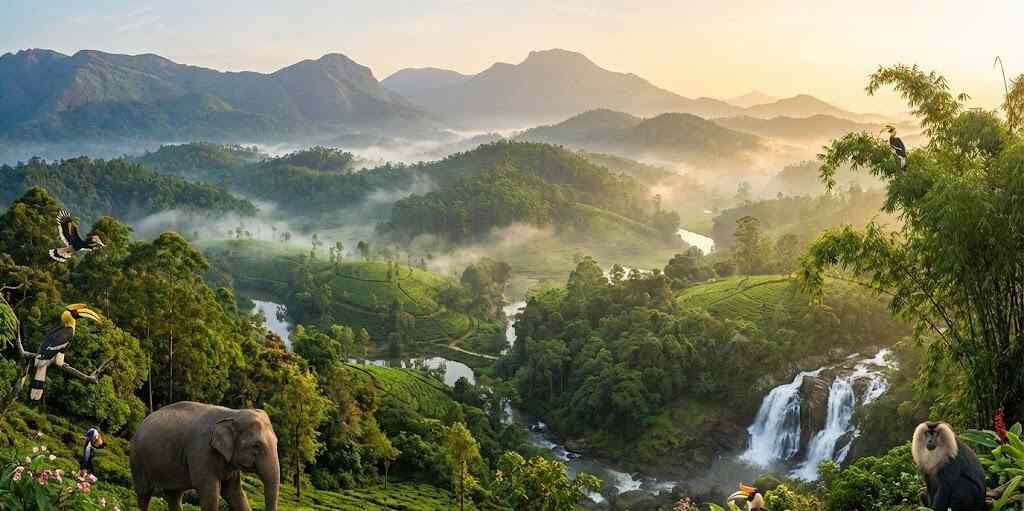
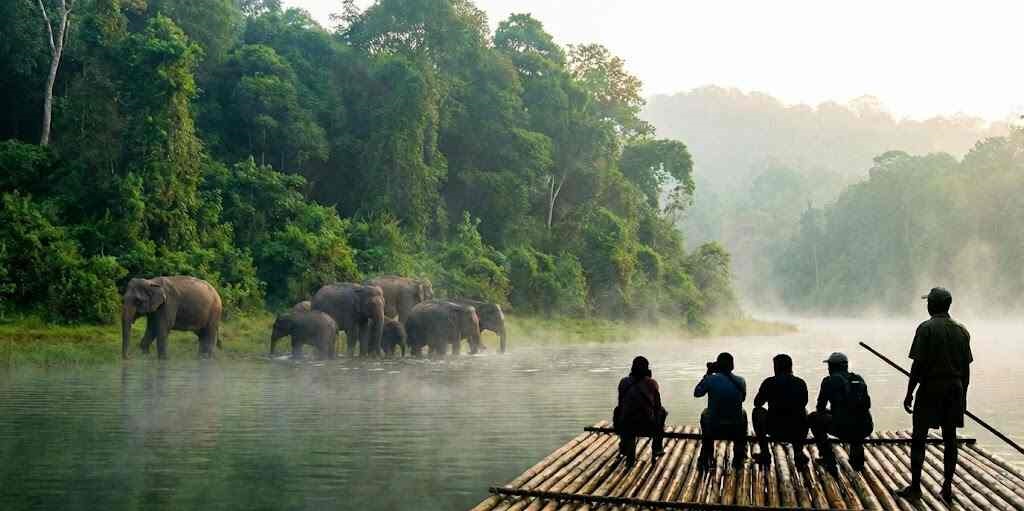
The biodiversity within this sanctuary is nothing short of staggering. Aside from the famous macaques, the park is a playground for some of India’s most colorful and exotic creatures. One of the most sought-after sights is the Malabar Giant Squirrel. This massive rodent is famous for its bright, multi-colored fur—shades of maroon, purple, and orange—that looks like a vibrant painting come to life. Seeing one leap between branches with its long, bushy tail trailing behind is a highlight for any trekker. The forest is also home to the elusive leopard, the majestic tiger, and the massive Indian elephant, although these predators often remain hidden in the deep, inaccessible interior of the core zone.
Birdwatchers also travel from across the globe to find the Great Indian Hornbill, a bird that looks like it belongs in a prehistoric world with its massive yellow beak and impressive wingspan. The sound of its wings flapping overhead is often compared to a small airplane. With over 200 species of birds and 1,000 species of flowering plants, every step in silent valley national park in kerala reveals something new and real. From the tiny, glowing fungi on the forest floor to the massive orchids hanging from the trees, the park is a masterclass in the interconnectedness of life. It is a place where every organism, no matter how small, plays a vital role in maintaining the health of this complex and beautiful tropical ecosystem.
Exploring the Sairandhri Watch Tower
The journey into the heart of the park is an adventure in itself, starting at the small village of Mukkali. From there, you must board an official Forest Department jeep for a 23km safari through the buffer zone. The road is rugged and bumpy, winding through dense foliage and crossing small mountain streams. As you climb higher, the temperature drops and the vegetation becomes even more lush. The drive is an excellent time to look for the Nilgiri Wood Pigeon or the Malabar Whistling Thrush, whose song sounds remarkably like a human whistling a tune. The jeep safari ends at Sairandhri, the gateway to the core area of the park, where the real exploration begins on foot under the guidance of a forest warder.
Once you reach Sairandhri, the highlight is climbing the 100-foot-tall watch tower. From the top, you are treated to a 360-degree view of the endless green canopy stretching toward the horizon. It is a sea of green, interrupted only by the silver thread of the Kunthipuzha River flowing below. After descending the tower, a short trek takes you down to the riverbank. The Kunthipuzha is legendary for its purity; because the river originates within the park and does not pass through any human settlements, the water remains crystal-clear and untainted. Sitting by the river, listening to the water rush over ancient rocks, you feel a profound sense of isolation from the modern world. It is the climax of the Silent Valley experience, where the beauty of Kerala’s nature is at its most raw and powerful.
Essential Tips for your Palakkad Silent Valley Trip
To keep the park pristine and protect its residents, the Forest Department enforces very strict rules that every visitor must respect. If you plan to visit palakkad silent valley, you must embrace the “leave no trace” philosophy. This means that everything you take into the forest must come back out with you. Plastic is the greatest enemy of this ecosystem; therefore, disposable plastic bottles and snack wrappers are strictly banned at the entry point. Visitors are encouraged to carry reusable steel bottles. The park is a sanctuary of silence, so loud music or shouting is prohibited to avoid stressing the wildlife. These rules ensure that the park remains a sanctuary for the animals first and a destination for humans second.
| Feature | Details |
| Permits | Only about 20-30 jeeps allowed per day. Booking early via the official portal is essential. |
| Best Time | October to February (Pleasant weather and high wildlife activity). |
| Plastic | Strictly banned. Do not bring any disposable plastic items into the park. |
| Leech Protection | Use “leech socks” and carry salt or tobacco extract, especially after rain. |
Preparation is key for a comfortable trip. One of the most common challenges is the presence of leeches, especially during or after the monsoon season. While they are harmless, they can be a bit shocking for first-time visitors. Wearing high-quality “leech socks”—which are long, tightly woven fabric bags worn over your socks—is the best way to keep them away. Additionally, carry a small pouch of salt or tobacco extract to safely remove any that manage to hitch a ride. By following these simple tips, you ensure that your trip is focused on the beauty of the forest rather than the minor inconveniences of the wilderness.
Logistics for the Global Traveler
Getting to this remote paradise requires a bit of logistical planning, but the effort is well rewarded. The nearest international gateway is Coimbatore International Airport in the neighboring state of Tamil Nadu, which is approximately 117 km away. From the airport, you can hire a private taxi to reach Mukkali. If you prefer the Indian rail experience, Palakkad Junction is the closest major railway station, located about 45 km from the park entrance. Local buses also run frequently from Palakkad to Mukkali, providing an affordable and authentic way to travel. It is important to note that the park is closed to visitors every Friday for maintenance and to give the wildlife a break from human presence.
Accommodations near the park are focused on eco-tourism. There are several government-run forest lodges and private eco-resorts near Mukkali that offer clean, comfortable rooms with local Kerala meals. These stays allow you to wake up to the sound of the forest right outside your window. Always check the official Kerala Forest Department website for the latest entry fees, jeep booking prices, and seasonal timings. Because of the limited entry permits, it is highly recommended to book your safari at least a few weeks in advance, especially if you are visiting during the peak season between December and April. Planning ahead ensures a smooth journey into one of the most magnificent wild places left on our planet.
Visit Silent Valley National Park with Indian Odyssey
If you are planning a journey to this ancient rainforest, let the experts guide your way. Indian Odyssey is a premier UK-based travel company specializing in bespoke holidays to Kerala India. They understand that Western travelers seek a perfect balance of adventure and comfort. By choosing to visit Silent Valley National Park with Indian Odyssey, you benefit from their deep local knowledge and commitment to sustainable tourism. They handle all the difficult logistics, from securing rare permits to arranging expert naturalist guides, ensuring your trek into the heart of the Nilgiris is seamless, ethical, and truly unforgettable.








 Expertise
 Quality trips honestly priced
 Environmentally friendly trips
 Freedom and choice
 Go beyond ordinary


