

The Western Ghats: India’s UNESCO Biodiversity Guide
Imagine a mountain range that is older than the Himalayas. Imagine a place where the air is cool, the forests are silent, and the only noise you hear is the sound of birds and waterfalls. This is the Western Ghats. For many travelers, India is famous for the busy streets of Delhi or the Taj Mahal. However, the Western Ghats offer a completely different experience. This UNESCO World Heritage site is a paradise for nature lovers. It runs parallel to the western coast of India and covers a massive area. It is one of the eight “hottest hotspots” of biological diversity in the world.
If you are a “Nature Purist” who loves birdwatching and silence, or a “Colonial Nostalgic” traveler who loves history and tea, this is your destination. The Western Ghats are perfect for “slow travel.” You do not rush here; you relax. The weather is pleasant, the people are friendly, and the scenery is breathtaking. It is often called the “Great Escarpment of India.” This region is crucial for the planet because it helps control the weather and provides water to millions of people. If you want to escape the heat and crowds of the cities, the Western Ghats are waiting for you.
Why We Call It the “Indian Amazon”
The Western Ghats are not just pretty hills; they are an ecological miracle. In 2012, UNESCO recognized 39 specific sites here as World Heritage Sites. This implies they are as important to the world as the Pyramids of Egypt or the Great Barrier Reef. The mountains here act like a giant barrier that catches the monsoon clouds coming from the ocean. Because of this, the western side gets heavy rain, creating thick, lush rainforests.
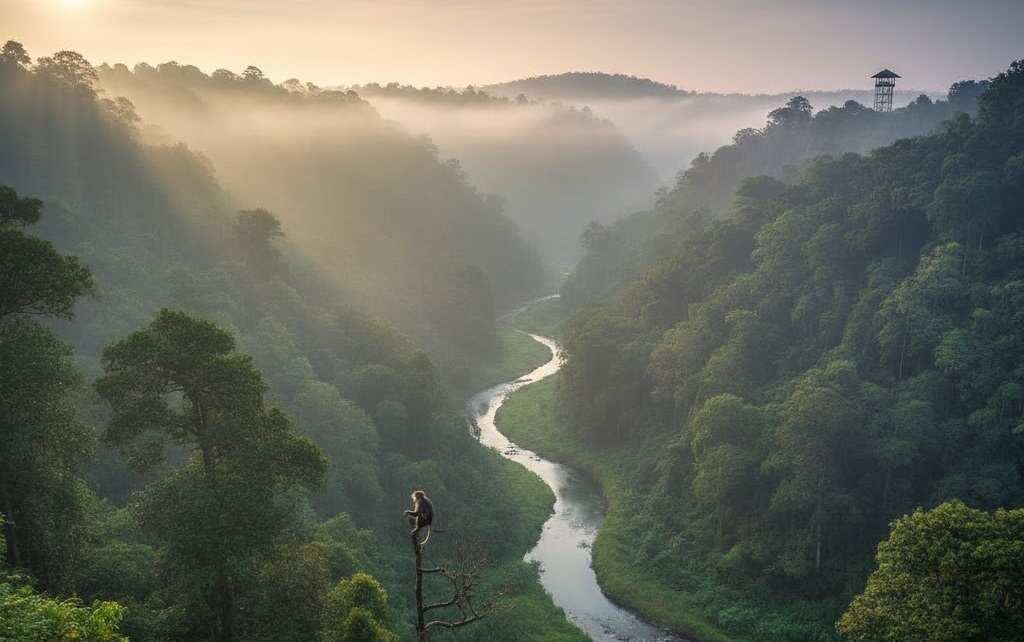
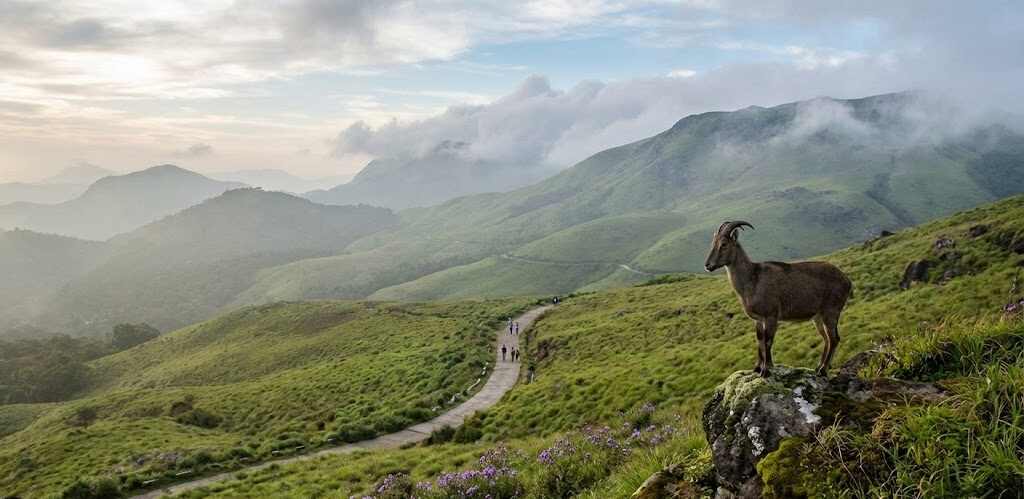
Inside these forests, you will find the rare Shola forests India is famous for. Shola forests are unique “cloud forests” found in the valleys, surrounded by rolling grasslands. They act like sponges that soak up rain and release it slowly into rivers. This unique ecosystem is home to animals you cannot find anywhere else on Earth. You might spot the Lion-tailed Macaque, a monkey with a silver mane, or the Nilgiri Tahr, a rare mountain goat. It is also a birdwatcher’s dream, with hundreds of species like the colorful Great Hornbill. When you walk here, you are walking through millions of years of natural history. It creates a feeling of deep peace that is hard to find in the modern world.
The “Colonial” Charm: Tea Gardens and Toy Trains
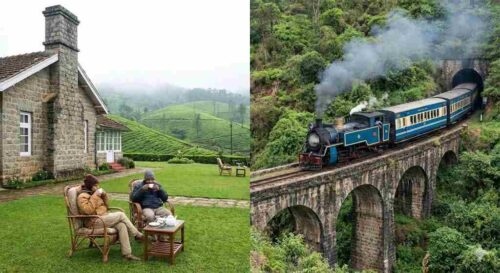
Relive the colonial charm: Enjoy fresh tea at a historic plantation bungalow in Munnar (left) and take a ride on the famous Nilgiri Mountain Railway “Toy Train” as it crosses an old stone bridge (right).
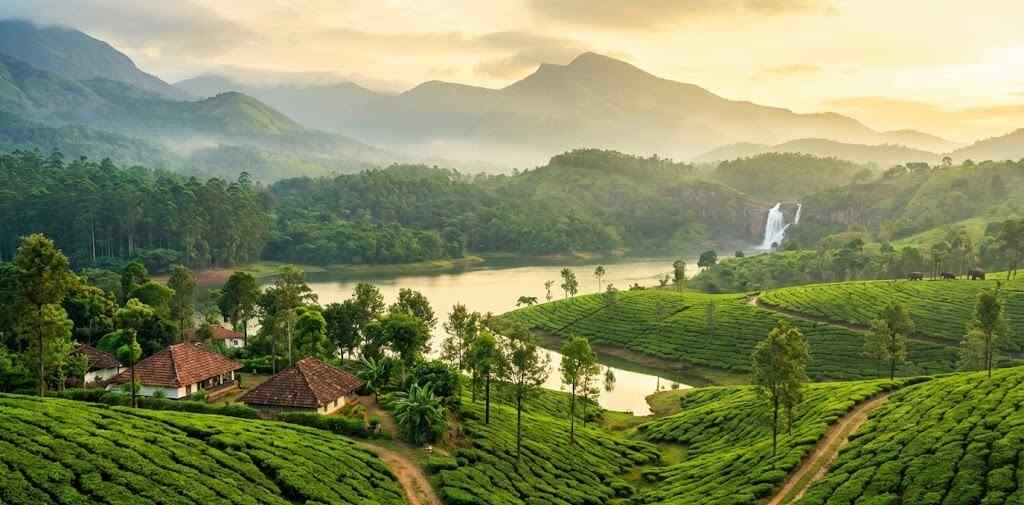
For travelers who love history, the towns of Munnar and Ooty are magical. During the British rule in India, the British officers found the heat of the plains too difficult. They moved to these hills to escape the summer heat. Today, you can see their influence everywhere. The hills are covered in neat, green rows of tea bushes that look like a green carpet.
To get the full experience, you must try a Munnar tea plantation stay. Many old bungalows built by British planters have been turned into hotels. Imagine waking up in a large stone house with a fireplace. You can sit on the lawn, drink fresh tea picked from the garden, and watch the mist roll over the mountains.
Another “must-do” activity is the Nilgiri Mountain Railway. This is a famous “Toy Train” that runs on a steam engine. It moves very slowly up the steep mountains, crossing old bridges and going through dark tunnels. It is a UNESCO site itself. However, you must plan ahead. Nilgiri Mountain Railway tickets booking is very competitive. Tickets open four months in advance and sell out in minutes. If you manage to get a seat, it will be one of the most memorable train rides of your life.
Ethical Wildlife: The Periyar Experience
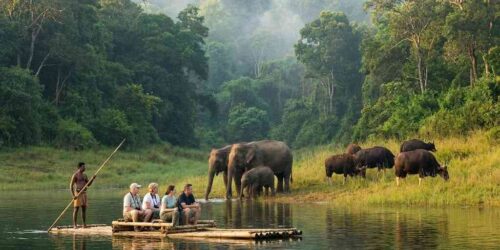
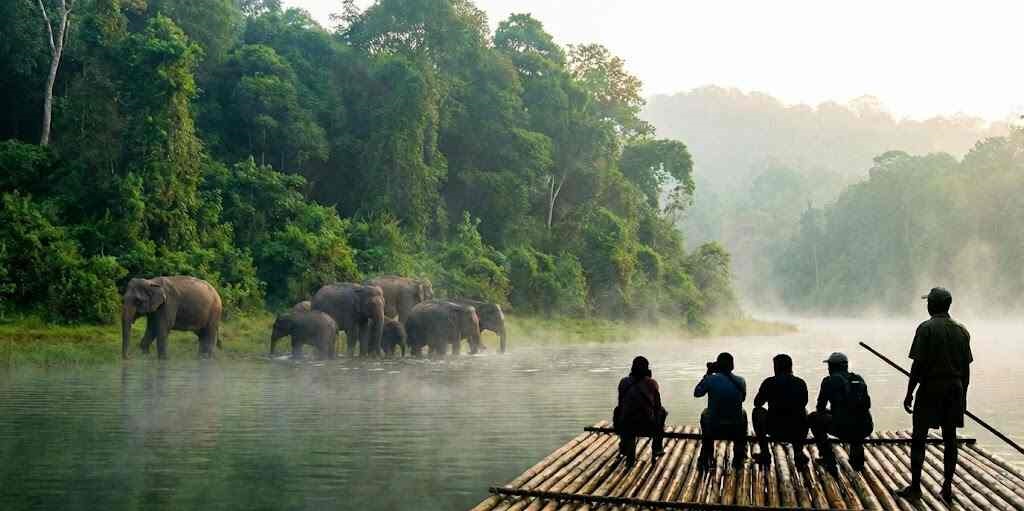
Experience ethical wildlife viewing at its best: A silent bamboo raft safari on Periyar Lake offers a respectful encounter with a family of wild elephants and a herd of Indian Gaur (bison) at the water’s edge.
Many Western travelers are very concerned about animal welfare. You might have seen photos of people riding elephants in India. We strongly advise you to avoid this. It is better to see animals happy in the wild. The best place for this is the Periyar Wildlife Sanctuary in Thekkady. This is a protected Tiger Reserve where animals roam freely.
The best time to visit Periyar Wildlife Sanctuary is early morning. Instead of a noisy jeep, we recommend the “Bamboo Rafting” program. This is a community-led eco-tourism initiative. You will hike through the forest with a tribal guide and then float silently on a bamboo raft on the lake. Because you are quiet, you have a high chance of seeing wildlife. You might see a family of wild elephants drinking water at the edge of the lake. You might see bison (Indian Gaur) grazing on the grass. While seeing a tiger is rare because they are shy, knowing they are watching you from the forest is thrilling. This is a wildlife safari South India style—peaceful, ethical, and respectful of nature. It allows you to connect with the wild without disturbing it.
Coffee Culture in Coorg: The “Scotland of India”
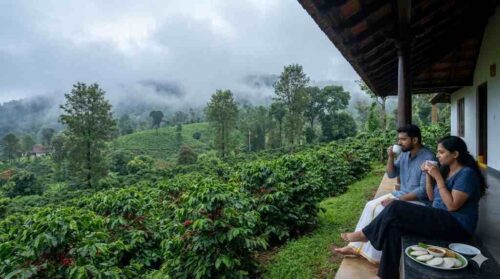
Immerse yourself in Coorg’s coffee culture: Enjoying a fresh brew and local breakfast on the veranda of a homestay, overlooking the misty plantations and rolling hills of the “Scotland of India.”
While Munnar is famous for tea, Coorg (also known as Kodagu) is the kingdom of coffee. If you love a strong morning brew, this is your paradise. Coorg is often called the “Scotland of India” because of its misty landscapes and cool climate. The culture here is different from the rest of the south. The local Kodava people are known for their bravery and hospitality.
In Coorg, you should not stay in a standard hotel. Instead, look for luxury homestays in Coorg for foreigners. These are usually large homes located right inside coffee plantations. When you stay here, you live with the hosts but have your own private, luxurious space. You can walk under the tall shade trees where coffee berries grow. If you visit during the blossom season (March-April), the whole district smells like white jasmine flowers. The hosts will serve you local food, like “Pandi Curry” (a spicy pork dish) and fresh rice cakes. It is an immersive experience where you learn about the journey of coffee from the bean to your cup. It is much more personal than staying in a city hotel.
Logistics: Comfort, Hygiene, and Transport
We know that logistical issues like hygiene and transport are big worries for travelers. You might be afraid of “Delhi Belly” (stomach issues) or unsafe roads. The good news is that the Western Ghats are very developed and tourist-friendly.
Accommodation: The standard of accommodation in South India is high. When we suggest a “Homestay,” do not think of a backpacker hostel. These are often grand houses with modern amenities. You will find sparkling clean “Western-style” toilets, hot showers, and comfortable beds. The hosts are used to Western guests and maintain high hygiene standards in the kitchen.
Transport: The roads in the Ghats are beautiful but very winding. They have many “hairpin bends” (sharp turns). We strongly recommend that you hire a private car with a dedicated driver. Do not try to drive yourself. Public buses are very cheap, but they drive very fast and can be scary for first-time visitors. A private car is affordable in India. Your driver acts as a guide and a translator. He can stop whenever you want to take a photo of a waterfall or buy fresh fruit from a roadside stall. This makes your trip stress-free and safe.
Safety, Health, and Solo Travel
Safety is a top priority, especially for solo travelers. A common question is: Is South India safe for solo female travelers? The answer is a confident yes. The culture in Kerala and nearby states is generally more relaxed, educated, and respectful compared to some other parts of the world. Women travel alone here frequently without issues. However, you should still use standard safety logic. Avoid walking alone on deserted trails after dark and dress modestly to respect local traditions.
Regarding health, the mountain air is fresh and clean. The risk of malaria is generally low in the high-altitude hill stations because mosquitoes prefer warmer plains. However, you should still carry a good insect repellent. The biggest annoyance in the forests is actually the leech. If you trek during the monsoon season (June to September), leeches are common in the damp grass. They are harmless but messy. To avoid them, you can wear “leech socks” which go over your trousers. Most guides carry salt or spray to remove them. If you visit in winter (December to February), the ground is dry, and you won’t face this issue. Also, tap water is not safe to drink anywhere in India; always drink filtered or bottled water to stay healthy.
Top Attractions in Kerala’s Western Ghats
If you are building your Kerala backwaters and hill stations itinerary, you need to know the best spots. Beyond the main cities, there are hidden gems you should explore.
- Munnar: This is the most famous hill station. It is known for endless tea gardens. You must visit the Eravikulam National Park to see the Nilgiri Tahr. Top Station offers a view where you feel like you are standing above the clouds.
- Wayanad: This is a greener, wilder district in the north of Kerala. It is perfect for adventure. You can visit the Edakkal Caves, which have stone carvings from prehistoric men. You can also see the Chembra Peak, which has a natural heart-shaped lake at the top.
- Idukki: This is a rugged district known as the “Spice Garden.” It features the massive Idukki Arch Dam, which is an engineering marvel. The views from Kalvari Mount are spectacular.
- Vagamon: If you hate crowds, go to Vagamon. It is a quiet hill station with pine forests and green meadows. It is becoming popular for paragliding.
- Silent Valley National Park: This is for the serious nature lover. It is one of the last untouched rainforests in India. Access is strictly controlled to protect the biodiversity. It is a place of pure silence and nature.
Smart Travel Tips for the Western Ghats
To ensure a smooth and enjoyable trip, you need to know a few “insider” secrets before you arrive. First, let’s talk honestly about the jungle environment. If you visit during the rainy season, you will likely encounter leeches. These are small, worm-like creatures found in damp grass. While they are harmless, they can be messy and annoying for first-time trekkers. Do not let this stop you from exploring! The solution is simple: wear “leech socks,” which are long canvas protective socks that go over your trousers. Most local guides also carry salt or spray to remove them safely and quickly. If you visit during the winter months, the ground is dry, and you will not have this problem at all.
Second, be prepared for a “Digital Detox.” In many remote areas, especially inside the deep Shola forests or on a secluded plantation, mobile internet signals can be weak or non-existent. Do not view this as a problem. Instead, see it as a rare opportunity to unplug from the world. You can read a book, listen to the sounds of nature, and truly relax without constant notifications. Third, you might be worried about the language barrier. You will be relieved to know that English is widely spoken in South India. The literacy rate here is among the highest in the country, so you will easily communicate with homestay hosts, drivers, and shopkeepers. Finally, a note on alcohol: rules in states like Kerala can be strict. You generally cannot buy alcohol in supermarkets. It is usually sold in specific government shops or served in hotels rated 3-stars and above. If you enjoy a glass of wine with dinner, it is best to check if your accommodation has a license beforehand.
Best Time to Visit: Choosing Your Season
Choosing the right time to travel will define your entire experience in the Ghats. For the majority of Western travelers, the Winter season (September to March) is the absolute best time to visit. During these months, the weather is perfect for exploration. The days are sunny, dry, and pleasant, while the nights are cool and crisp. In higher altitude locations like Munnar, you might even need a light sweater or jacket in the evenings. This is the ideal weather for a relaxed Munnar tea plantation stay or for hiking up the steep peaks. The trails are solid and dry, the sky is a brilliant blue, and the visibility for views is excellent. You can enjoy outdoor activities like the Nilgiri Mountain Railway or a wildlife safari in South India without worrying about rain canceling your plans.
However, there is a second option for the adventurous “Nature Purist”: the Monsoon season (June to August). This season is not for everyone, but it offers a magical experience. The rain in the Western Ghats is heavy, rhythmic, and dramatic. The forests turn an incredibly bright, vibrant green, and the waterfalls roar with power. This is the time when the region’s biodiversity is most active and alive. If you love photography or just want to sit on a balcony with a hot cup of tea watching the rain fall over the gardens, this season is peaceful and completely crowd-free. Just remember to pack high-quality rain gear! We generally recommend avoiding the peak Summer months (April and May) if possible, as it can get quite warm even in the hills, and many spectacular waterfalls may dry up.
Explore the Western Ghats with Indian Odyssey
Ready to turn this dream into reality? Planning a trip to India requires local expertise and reliable logistics. Indian Odyssey is a premier UK-based travel specialist dedicated to crafting bespoke holidays in Kerala India and the Western Ghats.
We bridge the gap between Western standards of comfort and authentic Indian adventures. Whether you seek the silence of a tea plantation or the thrill of an ethical wildlife safari, our experts ensure your journey is seamless and safe.
Start your journey with a partner you can trust.




 Expertise
 Quality trips honestly priced
 Environmentally friendly trips
 Freedom and choice
 Go beyond ordinary


