
February is one of the most festival-rich and climatically rewarding months in the travel calendar. Across Asia, the Lunar New Year transforms cities from Penang to Singapore, Kathmandu to Ho Chi Minh City, into spectacular celebrations of light, colour and family reunion – creating an energy that no amount of careful itinerary planning can entirely replicate. At the same time, the dry season across South and Southeast Asia remains firmly in place: the beaches of Sri Lanka, the Maldives and Thailand are at or near their annual peak, the wildlife parks of India and Nepal are producing their finest sightings of the year, and the ancient monuments of Cambodia and Vietnam are bathed in the clear, unhazy light that only the cool dry season delivers. In the Middle East, Dubai and Oman are enjoying the last of their peak outdoor weeks before the temperatures of spring begin to climb. February is also the month of romance – and few places in the world do romance quite like the Maldives, Bhutan at festival time, or a candlelit dinner on a Goan beach with the season at its most golden.
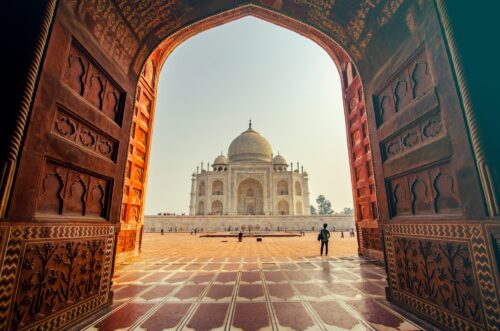
Holi on the Horizon, Wildlife at Its Peak & Goa’s Final Golden Weeks
✈ Flight time from UK: 8.5 hours
February sits in a sweet spot for travel across India – the cool-season clarity of January is still very much in evidence, and the country is beginning to stir with the anticipation of Holi, which falls in March and draws enormous excitement in Rajasthan’s cities from the final weeks of February onwards. The Golden Triangle continues to deliver the finest sightseeing conditions of the year: the Taj Mahal at sunrise glows with a particular warmth in February’s soft winter light, and Rajasthan’s palaces and forts are at their most inviting. On the wildlife front, Ranthambore, Kanha and Bandhavgarh are in full peak season – vegetation is at its thinnest, waterholes are dwindling and the tiger sightings being reported by safari guides are among the most reliable of any month. In Goa, the beach season is approaching its final golden chapter – the shacks are still open, the water is warm and the famous Goa Carnival fills the streets of Panaji and Margao with floats, music and colour in the days before Lent. And in the Himalayas, Manali and the Spiti Valley are deep in snow – a completely different India awaits those who seek a winter mountain escape.
Specialist tip: Goa Carnival (February/March) is one of India’s most exuberant street festivals.
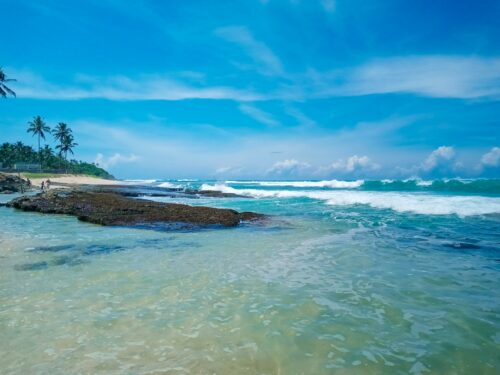
Whale Watching Season Peaks & the West Coast Stays Perfect
Flight time from UK: 9.5hrs
February is the single finest month to visit Sri Lanka. The west and south coasts – Mirissa, Weligama, Unawatuna and the grand Dutch streets of Galle Fort – are at the absolute peak of their dry season, with temperatures around 29°C, settled seas and long, brilliantly clear days that seem almost engineered for beach holidays and open-air exploration. Offshore from Mirissa, the blue and sperm whale watching reaches its zenith in February – the deep-water canyon just beyond the reef is one of the world’s most productive cetacean grounds at this time of year, and a morning boat trip here can be one of the most astonishing wildlife experiences available anywhere in Asia. Inland, the ancient rock fortress of Sigiriya casts its best morning shadow, Yala’s leopards are still coming to the drying waterholes in the south, and the hill country’s tea estates around Ella and Nuwara Eliya sit in cool, cloud-threaded serenity that provides a welcome contrast to the coast. The Kandy Perahera’s minor season also adds colour to the cultural calendar this month.
Specialist tip: February is the most reliable month for blue whale encounters off Mirissa – book your sunrise boat trip in advance
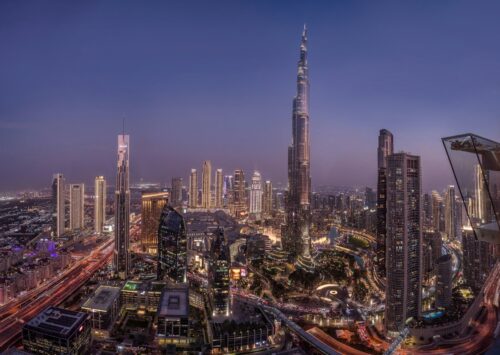
Valentine’s Escapes, the Food Festival & Peak Outdoor Season
Flight time from UK: 7.5hrs
February is one of the finest months in Dubai’s calendar, continuing the perfection of January with temperatures that remain ideal throughout – warm enough for beach afternoons and cool enough for desert evenings that genuinely require a jacket. The Dubai Food Festival runs from late February, and the city transforms into a showcase of its extraordinary culinary diversity: long-table beach dinners, celebrity chef pop-ups along the waterfront and the legendary Etisalat Beach Canteen draw food lovers from across the region. Valentine’s Day in Dubai carries a particular lustre – the city throws itself into it with helicopter dinner arrivals at the Burj Al Arab, private dhow cruises under the stars, and overwater cabana breakfasts at the beachfront resorts that are simply not available anywhere else in the world at this price point. Art Dubai in February and March brings the international contemporary art world to Madinat Jumeirah, while the Dubai Shopping Festival, which stretches from January into February, ensures the retail experience remains as animated and deal-laden as at any point in the year. The desert, the souks and the skyline are all at their most accessible.
Specialist tip: The Dubai Food Festival begins in late February – restaurant reservations at the most in-demand venues fill weeks in advance, so we recommend booking in advance.
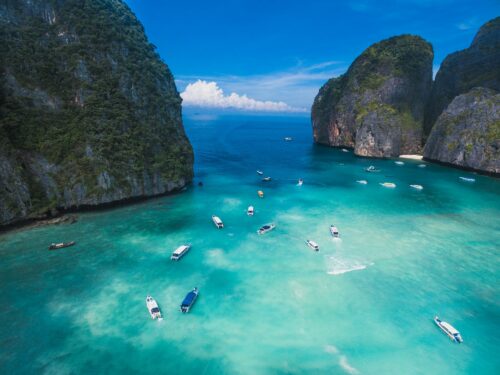
Chiang Mai in Full Bloom & the Andaman Coast at Its Most Beautiful
Flight time from India: Approx. 4 hrs from Mumbai · 3.5 hrs from Kolkata · 5.5 hrs from Delhi
Time difference: ICT (UTC +7) – 1.5 hrs ahead of India
February is among Thailand’s most celebrated travel months, and for good reason. The cool season is still very much in evidence across the country, and in Chiang Mai the famous Flower Festival fills the moat road with extraordinary floral parade floats each February, drawing visitors who time their trip specifically around this single weekend of extraordinary colour and craftsmanship. The Andaman coast – Phuket, Krabi, Koh Lanta and the Phi Phi Islands – is at its peak dry-season finest: the seas are perfectly calm, the underwater visibility is at its clearest of the entire year, and the long-tail boats that shuttle between the towering limestone karsts of Phang Nga Bay do so on water so flat it resembles polished jade. In the north, the mountains around Pai and Mae Hong Son are still wrapped in cool morning mist, making the road from Chiang Mai one of the most scenic drives in Southeast Asia. The Full Moon Party on Koh Phangan draws its second-largest international crowd of the year in February, and across Bangkok, the Chinese New Year celebrations that began in January continue into early February with lion dances and temple offerings lighting up Chinatown and Yaowarat Road.
Specialist tip: Chiang Mai Flower Festival falls on the first weekend of February – if your dates allow, this is one of the most photogenic events in Thailand’s entire calendar.
Tet, the Country’s Greatest Celebration, Transforms Every City
✈ Flight time from India: Approx. 5 hrs from Mumbai · 6 hrs from Delhi · 3.5 hrs from Chennai/Kolkata – Time difference: ICT (UTC +7) – 1.5 hrs ahead of India
February in Vietnam revolves around one of Asia’s most magnificent festivals: Tet, the Lunar New Year, which typically falls in late January or February and represents the most important celebration in the Vietnamese calendar. Cities across the country erupt in marigold and kumquat trees, red envelopes and firecracker smoke – Hanoi’s Hoan Kiem Lake is wreathed in lanterns, Ho Chi Minh City’s boulevards are lined with flower markets and the ancient town of Hoi An, always atmospheric, becomes something close to magical in the days surrounding the full moon. Travelling through Vietnam around Tet requires planning – domestic transport must be booked months ahead, and some restaurants and smaller guesthouses close for the holiday week – but for those who embrace the festival rather than try to avoid it, the experience is unforgettable. Outside of the Tet period, February is also one of the finest months for beach travel in central and southern Vietnam: Da Nang’s beaches are warming up, Hoi An’s An Bang beach is quiet and the Mekong Delta’s river life flows on regardless, with sampan tours through the floating markets an enduring highlight.
Specialist tip: Confirm the exact Tet dates for your travel year – the week before Tet is one of the finest times to visit as markets and temples buzz with pre-festival energy.
Losar, Rhododendrons & the Last Quiet Weeks Before Spring Crowds
Flight time from India: Approx. 1.5 hrs from Delhi · 2 hrs from Kolkata · 2.5 hrs from Mumbai
February is one of Nepal’s most rewarding and underappreciated months for travel. The skies above the Himalayas are clear and cold, and the mountain views from Pokhara’s lakeside and the rooftops of Kathmandu’s heritage squares are at their absolute sharpest – every distant peak crisp against the blue, without the haze of the pre-monsoon season or the cloud of the rains. Losar, the Tibetan New Year, is celebrated with remarkable energy in the monasteries of Boudhanath and Kopan in Kathmandu, as well as across the Sherpa communities of the Khumbu valley – butter lamps, monks in ceremonial robes and the rhythmic crash of cymbals fill the courtyards from dawn. On the trekking trails, February sits in a quiet window before the spring rush: the lower sections of the Annapurna Circuit are beginning to see their first rhododendron buds, the Langtang Valley is serene and uncrowded, and the Everest region’s tea houses are open but not yet full. For those seeking a genuinely peaceful Himalayan experience without sacrificing the mountain views, February is the month most specialist guides quietly recommend.
Specialist tip: Pack thermal layers even for lower-altitude treks in February – nights in the hills around Pokhara and Nagarkot can drop to near-freezing after dark.
Punakha Tshechu – The Kingdom’s Most Beautiful Winter Festival
Flight time from India: Approx. 2 hrs from Delhi · 2.5 hrs from Kolkata (via Paro)
February is one of the most magical months to visit Bhutan, and the reason is singular: the Punakha Tshechu, the annual festival held in the courtyard of the magnificent Punakha Dzong, the fortress that sits at the confluence of the Mo Chhu and Pho Chhu rivers. Masked dancers in silk costumes perform the ancient cham dances against a backdrop of whitewashed walls and a hanging thangka of extraordinary scale, while the valley below blooms with cherry blossoms and the first jacaranda flowers of the year. Beyond the festival, February offers Bhutan at some of its most visually stunning: the dzongs of Trongsa and Wangdue Phodrang are still lightly dusted with snow at their upper towers, the roads between Paro and Thimphu pass through forests of silver birch, and the Phobjikha Valley – where black-necked cranes have been wintering since October – still holds its resident flock before they begin their migration back to Tibet in March. The tourist season has not yet reached its spring peak, meaning the monasteries and trekking trails are quieter than in April, and hotel rates reflect the situation accordingly.
Specialist tip: Punakha Tshechu dates shift each year according to the lunar calendar – confirm the exact dates with your specialist well in advance, as accommodation in Punakha is extremely limited.
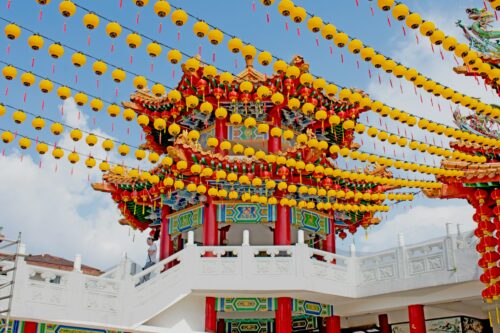
Chinese New Year Illuminates Penang & Kuala Lumpur, Langkawi at Its Best
Flight time from India: Approx. 4 hrs from Mumbai · 5.5 hrs from Delhi · 3.5 hrs from Chennai
Time difference: MYT (UTC +8) – 2.5 hrs ahead of India
February brings Malaysia’s most dazzling cultural spectacle: Chinese New Year, which transforms the UNESCO heritage streets of Penang’s George Town and Kuala Lumpur’s Chinatown into something completely extraordinary. Thousands of red lanterns are strung along the shophouse arcades of Penang’s Armenian Street and KL’s Petaling Street, the sound of lion dances reverberates through the narrow lanes from before dawn, and the scent of incense, pineapple tarts and freshly steamed bao fills every doorway. The Thaipusam festival, one of Hinduism’s most visually intense ceremonies, also falls in January or February – at Batu Caves near KL, a million devotees and visitors gather to watch kavadi carriers climb the 272 steps to the cave temple, many of them pierced with skewers and spears in acts of devotion that are among the most extraordinary spectacles in Southeast Asia. Away from the festivals, Langkawi on the Andaman coast is in peak beach season – the waters are at their calmest and clearest, ideal for island-hopping, snorkelling and the cable car ride to the peak above Burau Bay. Borneo’s wildlife circuit continues to deliver year-round.
Specialist tip: Thaipusam at Batu Caves is one of Asia’s great spectacles – visit the temple the evening before the main festival day when the ceremonial procession arrives by night from central KL.

Valentine’s Perfection – The Romantic Capital of the Indian Ocean
Flight time from India: Approx. 2.5 hrs from South India (Kochi/Chennai) · 3.5 hrs from Mumbai · 5 hrs from Delhi
The Maldives in February combines the finest weather conditions of the year with the world’s most celebrated romantic occasion, making it the single most in-demand month at the Indian Ocean’s most iconic resorts. The northeast monsoon continues to hold the archipelago in dry-season perfection: the seas are flat and brilliantly turquoise, underwater visibility exceeds 30 metres across most atolls, and the quality of light in the late afternoon – when the sun drops towards the horizon over the lagoon – is the kind that makes even an amateur photographer look like a professional. Whale sharks are reliably present at South Ari Atoll throughout February, the manta ray population is building ahead of the peak aggregation season, and the house reefs of the Baa and North Malé atolls are teeming with the colourful reef fish that make even a 20-minute snorkel from the villa steps feel like a David Attenborough sequence. For honeymooners and couples celebrating anniversaries, February in the Maldives sets the benchmark against which every other romantic destination is measured.
Specialist tip: Valentine’s week at the top Maldives resorts sells out twelve months in advance – if February 14th matters to your trip, begin planning in February of the previous year.
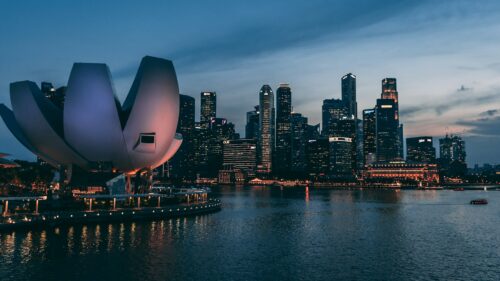
Chinese New Year – The City’s Most Spectacular Annual Transformation
Flight time from India: Approx. 5 hrs from Mumbai · 5.5 hrs from Delhi · 3.5 hrs from Chennai
February is the month when Singapore reaches its most spectacular annual pitch of energy and colour. Chinese New Year – which falls in late January or early February depending on the lunar calendar – is celebrated here with a scale and artistry that few cities anywhere in the world can match. The Chinatown light-up, which has been building since January, reaches its full brilliance in the days surrounding the New Year: tens of thousands of lanterns and light installations transform the streets between Pagoda Street and Smith Street into a corridor of gold and crimson that draws visitors from across the region. The River Hongbao festival at Marina Bay adds floating lantern installations and cultural performances to the waterfront, and the streets around Little India simultaneously celebrate the Hindu festival of Thaipusam, adding yet another layer to the city’s extraordinary multicultural festival season. Beyond the celebrations, February offers Singapore at its most pleasant in terms of weather – marginally cooler and with lower humidity than the peak of the year – and the food scene, anchored by the hawker centres and rooftop restaurants of the city’s diverse neighborhoods, is as compelling as ever.
Specialist tip: The Chinatown light-up is best experienced on foot in the evenings

Browse through our tour ideas for inspiration and contact our friendly experts by call or email. Get a detailed customised tour quote within 48hrs.
 Sign up for our latest news
No Fields Found.
Sign up for our latest news
No Fields Found.