

There is a specific kind of silence found only on the waters of Lake Vembanad. It is not a hollow or empty quiet, but rather a sophisticated symphony of organic textures: the rhythmic, wet slap of a long bamboo pole against the ancient lake silt, the distant, haunting call of a Siberian stork traversing the flyway, and the constant, gentle rustle of coconut palms that fringe the horizon like frayed green velvet against a violet sky. For the modern traveler, the very definition of luxury has undergone a radical transformation. It is no longer found in the gaudy gold leaf of city hotels or the forced artifice of traditional high-end hospitality.
Instead, true luxury is defined by space, time, and absolute authenticity. While much of the world rushes headlong toward the “next big thing,” a journey on a boathouse in Kumarakom offers a rare invitation to do the exact opposite: to slow down, to breathe, and to embrace the forgotten art of stillness. This is a destination where the “discerning” tag isn’t just marketing—it is a requirement for appreciating the subtle shifts in light over the water and the profound peace of a landscape that refuses to be hurried. By choosing Kumarakom, the traveler chooses a deliberate departure from the chaotic pace of modern life, opting instead for a floating sanctuary that prioritizes the rhythm of nature over the demands of the clock.
The Great Divide: Kumarakom vs. Alleppey
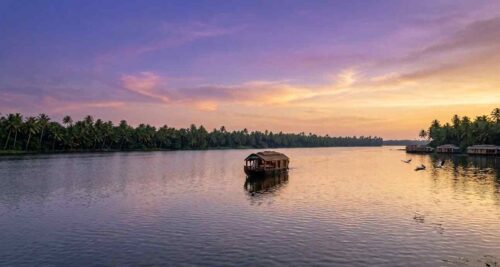
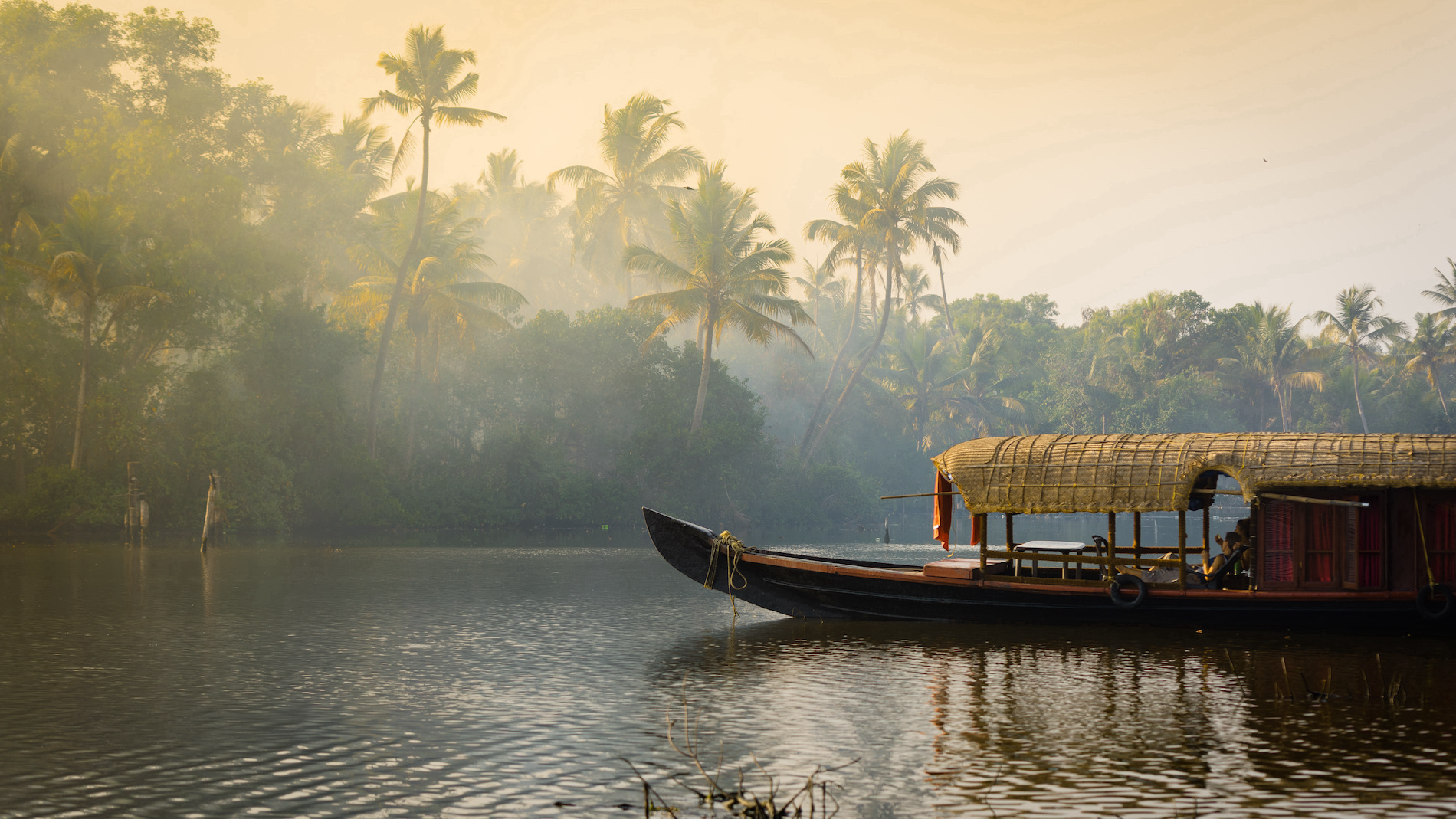
The Golden Hour of Quiet Isolation: A solitary traditional Kettuvallam drifts across the immense, glassy expanse of Vembanad Lake in Kumarakom at sunset, illustrating the vastness, privacy, and curated, undisturbed space that defines the region’s luxury experience.
For decades, Alleppey (Alappuzha) has served as the boisterous face of the Kerala backwaters, drawing thousands of tourists to its winding canals and festive atmosphere. However, for the traveler seeking a more curated, tranquil, and elevated experience, Kumarakom has emerged as the sophisticated, elite alternative. The primary difference is rooted in the sheer geography of the region. While Alleppey is defined by a dense, charming network of narrow canals—which, while beautiful, can often feel congested with boat traffic—Kumarakom opens up into the breathtaking vastness of Vembanad Lake. This is one of the largest freshwater lakes in India, and its scale dictates a completely different rhythm of travel. Here, the “traffic jams” of houseboats are virtually non-existent, replaced by an oceanic sense of scale and isolation.
A private backwater cruise on Vembanad Lake ensures that your only neighbors for hours on end are the local fishermen in their slender wooden vallams, casting gossamer nets into the golden morning mist. In Kumarakom, the focus shifts from “seeing the sights” to “feeling the environment.” The expanse of the lake creates a buffer from the outside world, allowing for a level of privacy that is simply unattainable in the busier arteries of Alleppey. It is the difference between a crowded city square and a private estate; both have their merits, but only one offers the profound sense of sanctuary that the luxury traveler demands.
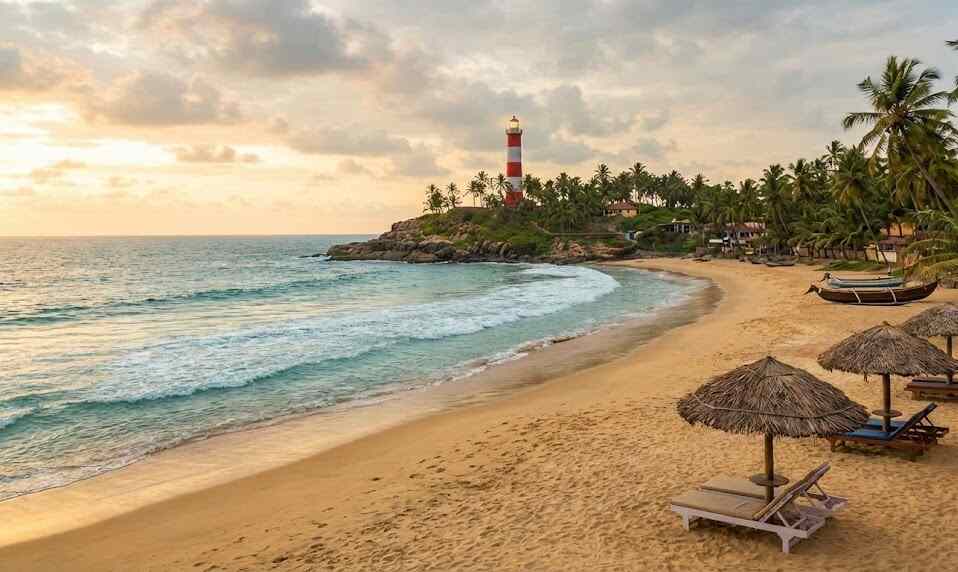
Related Post: Kovalam Beach: The Perfect “Soft Landing” in India
From Spice Barges to Floating Sanctuaries: The Kettuvallam Heritage
The kerala backwaters kumarakom —locally known as a Kettuvallam—is a marvel of indigenous engineering that speaks to the resourcefulness of the Keralite spirit. Long before these vessels were outfitted with climate control and plush linens, they were the rugged heavy-lifters of the 1950s, used to transport massive loads of rice and aromatic spices across the watery arteries of the state. For the Western traveler, historical context adds a layer of richness to the experience that no modern build can replicate. The construction of these boats remains a point of immense local pride and traditional craftsmanship. Each boat is crafted without the use of a single metal nail; instead, massive planks of Jack-wood are painstakingly sewn together with coir (coconut fiber) rope.
To make the hull watertight and resistant to the elements, it is sealed with a pungent, blackened resin made from boiled cashew nut shells. This ancient technique results in a vessel that is not only incredibly durable but also traditionally carbon-neutral. Stepping aboard a luxury Kettuvallam today is not merely a hotel check-in; it is an immersion into a living history. You are walking on decks that represent a transition from the utilitarian commerce of the mid-20th century to a modern era of high-end, sustainable comfort. This marriage of rugged heritage and refined luxury creates the unique “sense of place” so highly valued by seasoned globetrotters.
Related Post: Eravikulam National Park in Kerala: A Complete Travel Guide
Luxury Standards: What to Expect in 2026
In the realm of luxury houseboats in Kumarakom, the term “luxury” is interpreted through a delicate lens of environmental harmony balanced with uncompromising modern convenience. By 2026, the standard for a “Premium” boat has been raised significantly to meet the expectations of international travelers. A standard luxury vessel now features 24/7 whisper-quiet climate control, essential for the humid tropical climate, and en-suite bathrooms equipped with high-pressure hot water and premium organic toiletries. However, for those looking for the pinnacle of the experience, the “Ultra-Luxury” tier offers features that rival five-star land-based resorts.
These might include private upper decks for secluded sunbathing, glass-walled bedrooms that provide 360-degree views of the moonlit lake, and even on-board Jacuzzis. Beyond the physical amenities, there is a deep focus on the service and safety of the experience. Hygiene standards are addressed with rigorous professionalism; reputable operators use strictly filtered water for all culinary purposes and follow international food safety protocols. Furthermore, while digital connectivity is available, the culture of Kumarakom luxury subtly encourages a “presence over pixels” philosophy. The true indulgence here is the ability to disconnect from the global grid while knowing that every comfort—from high-thread-count linens to a perfectly chilled glass of wine—is being managed with silent, expert precision by your dedicated on-board crew.
Related Post: The Ultimate Guide to a Traditional Kerala Meal
A Day on the Water: A Sensory Journey
The clock ceases to have any authority the moment the heavy moorings are cast off and the boat drifts into the current. Your day begins at approximately 06:00 AM, not with an alarm, but with the subtle scent of blooming water lilies and the cool, damp air of the lake. As the mist sits heavy on the water, you might find yourself near the Kumarakom Bird Sanctuary, witnessing the spectacular morning commute of herons and egrets. By mid-morning, as you glide away from the open lake and into more intimate, palm-fringed lagoons, the landscape reveals the “Responsible Tourism” model that Kerala is famous for.
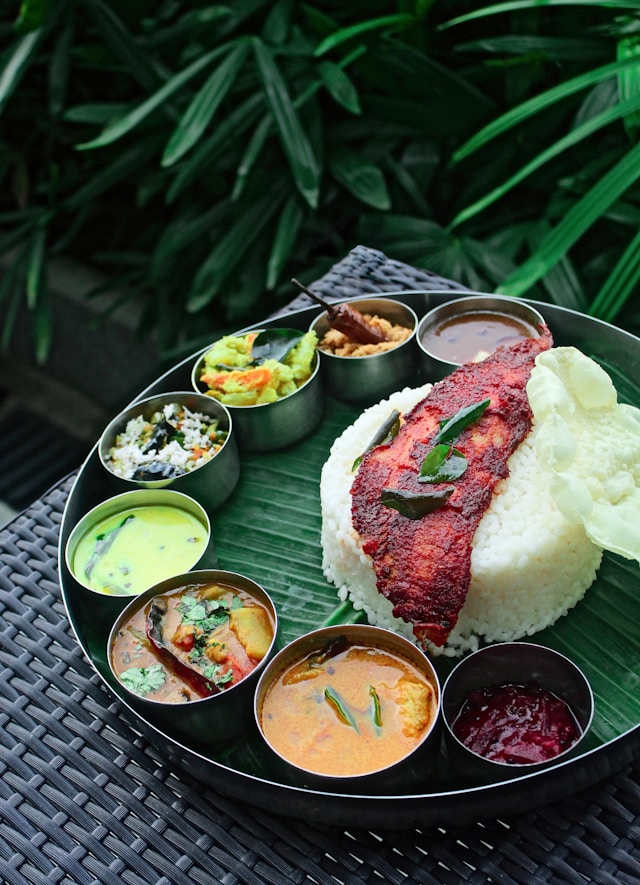
You will see the daily life of the backwaters unfolding with cinematic beauty: women in vibrant sarees washing clothes on stone steps, children rowing themselves to school in tiny dugouts, and the “toddy tappers” nimbly climbing palms to collect sap. Lunch is a sensory ritual served on the deck. The centerpiece is almost always Karimeen Pollichathu (Pearl Spot fish), which is marinated in a complex paste of ginger, garlic, and chilies, wrapped in a fresh banana leaf, and grilled over charcoal. The result is a dish that is smoky, tender, and deeply aromatic. As the sun begins its descent, turning the sky a bruised violet and burnt orange, the boat anchors for the night. This is a legal requirement in Kerala to allow local fishermen to cast their nets, creating a nightly “silent hour” where the only light comes from the flicker of lanterns on your deck and the vast, unpolluted canopy of stars above.
Related Post: The Ultimate Mirissa Beach Guide for Western Travelers
Sustainable Houseboats: The 2026 Green Standard
In 2026, eco-consciousness is no longer a “niche” preference; it is the gold standard for travel in the Kerala backwaters. The most sought-after operators in the region now hold Green-palm certificates, a government-backed accreditation that ensures the vessel operates with minimal impact on the fragile aquatic ecosystem. Sustainable houseboats in Kumarakom are leading the way in green technology, utilizing solar-powered lighting and water heating systems, advanced bio-toilets that prevent waste discharge into the lake, and strict “no single-use plastic” policies. For the discerning traveler, this commitment to sustainability adds a layer of ethical comfort to the physical luxury.
It is about “guilt-free” indulgence. Choosing a sustainable operator means your travel investment directly supports the “Responsible Tourism” mission of the local community. This model ensures that the proceeds from your trip help maintain the cleanliness of the lake and provide fair wages to the villagers who have lived on these banks for centuries. This symbiotic relationship between high-end tourism and local preservation is what keeps Kumarakom pristine. When you choose a green-certified boathouse, you are not just a spectator of the beauty; you become a patron of its survival. This ethical alignment is a hallmark of the sophisticated traveler who understands that the preservation of a destination is just as important as the enjoyment of it.
Related Post: The Ultimate Guide to the Kerala Backwaters: A Slow Travel Experience
Technical Details and Practicalities
Navigating the logistics of a trip to Kerala requires a blend of foresight and local knowledge. The best time to visit remains the “Golden Window” between October and March. During these months, the weather is pleasantly mild, the humidity is at its lowest, and the skies are a consistent, brilliant blue. This is also the peak season for birdwatching, as the sanctuary fills with migratory species from across the globe. Conversely, the Monsoon season (June to August) offers a different, more dramatic kind of beauty—lush, rain-drenched greenery and a moody, romantic atmosphere—though the lake can be quite choppy and outdoor activities are limited. For those planning a visit during the high-demand months of December and January, the most critical piece of advice is to book your boathouse at least six to nine months in advance.
The limited number of “Ultra-Luxury” and “Green-certified” vessels means that the best inventory disappears quickly. Avoid the temptation to rely on “walk-in” bookings at the public jetties; these boats are often of lower quality and may not adhere to the safety standards expected by international travelers. Regarding your packing list, prioritize breathable, natural fabrics like linen and organic cotton. Ensure you bring a high-quality, reef-safe sunscreen and a pair of professional-grade binoculars for the bird sanctuary. Finally, while the local cuisine is a highlight, don’t hesitate to communicate your spice tolerance to your private chef—they are masters at tailoring traditional flavors to a global palate without losing the dish’s soul.
Ready to experience a boathouse in Kumarakom? Indian Odyssey is a UK-based travel company specializing in bespoke holidays to Kerala India. Contact us to plan your perfect coastal escape.


 Expertise
 Quality trips honestly priced
 Environmentally friendly trips
 Freedom and choice
 Go beyond ordinary


