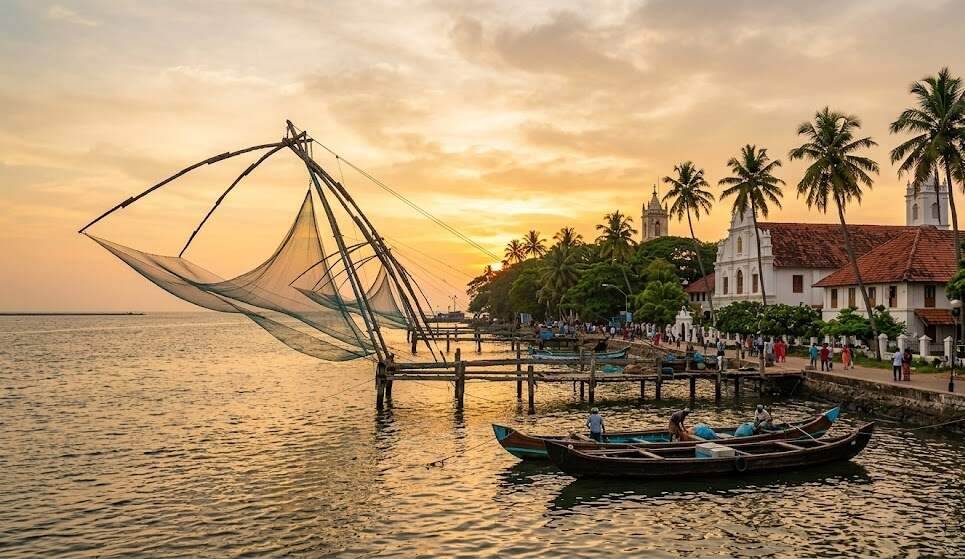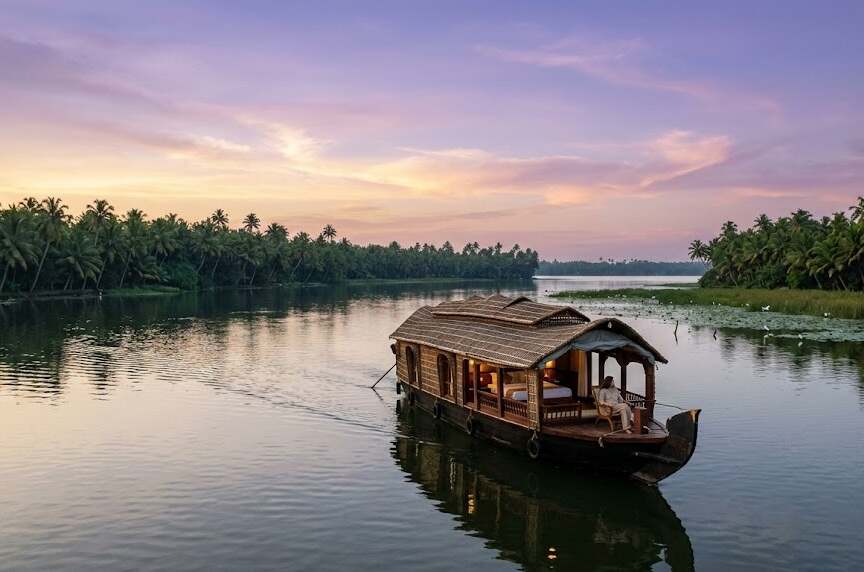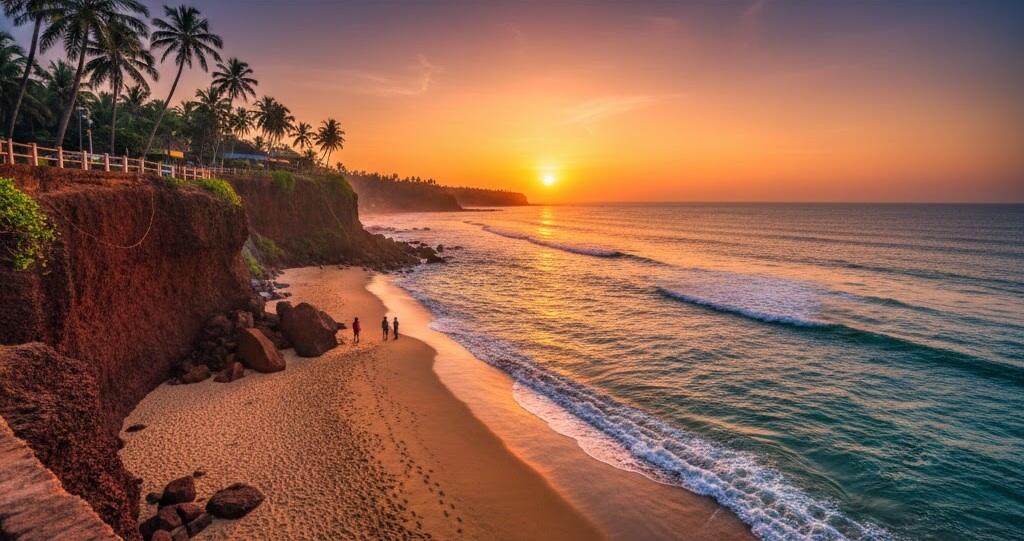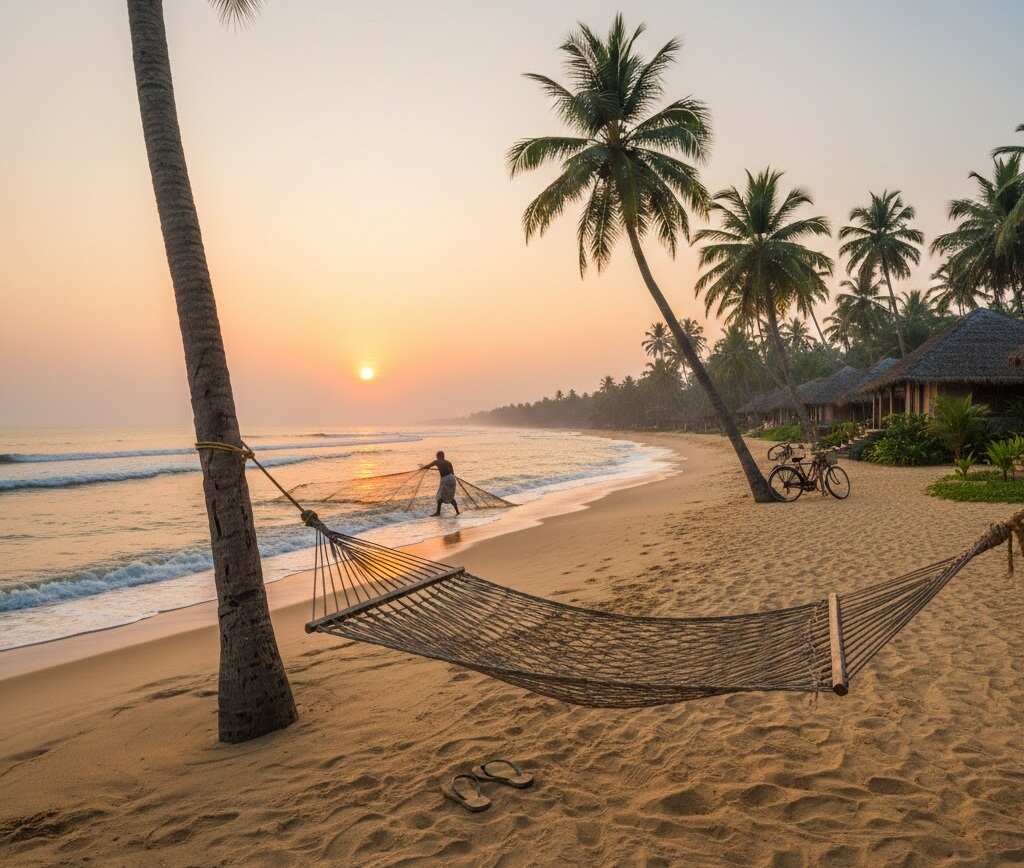


Picture the scene: a wooden boat drifting past emerald paddy fields, coconut palms leaning lazily over still water, and the only sound is the gentle slap of the oar. Welcome to the Kerala backwaters, one of India’s most enchanting landscapes and a destination that regularly tops the wish list of UK travellers seeking something different.
The backwaters of Kerala India, are a maze of lagoons, canals, rivers and lakes that run parallel to the Arabian Sea coast, stitching together fishing villages, temples and rice paddies into one of the most photographed regions in South Asia. They’re famous the world over for the humble houseboat — a converted rice barge that’s been transformed into a floating home complete with bedrooms, a kitchen and a sundeck.
A night or two aboard a Kerala houseboat is the reason so many people visit this part of India, whether they seek total relaxation, a slice of authentic village life, or simply the best photos of their trip. In this guide, we’ll cover everything you need to plan your Kerala backwaters adventure – from the best places to visit to what to expect on board.
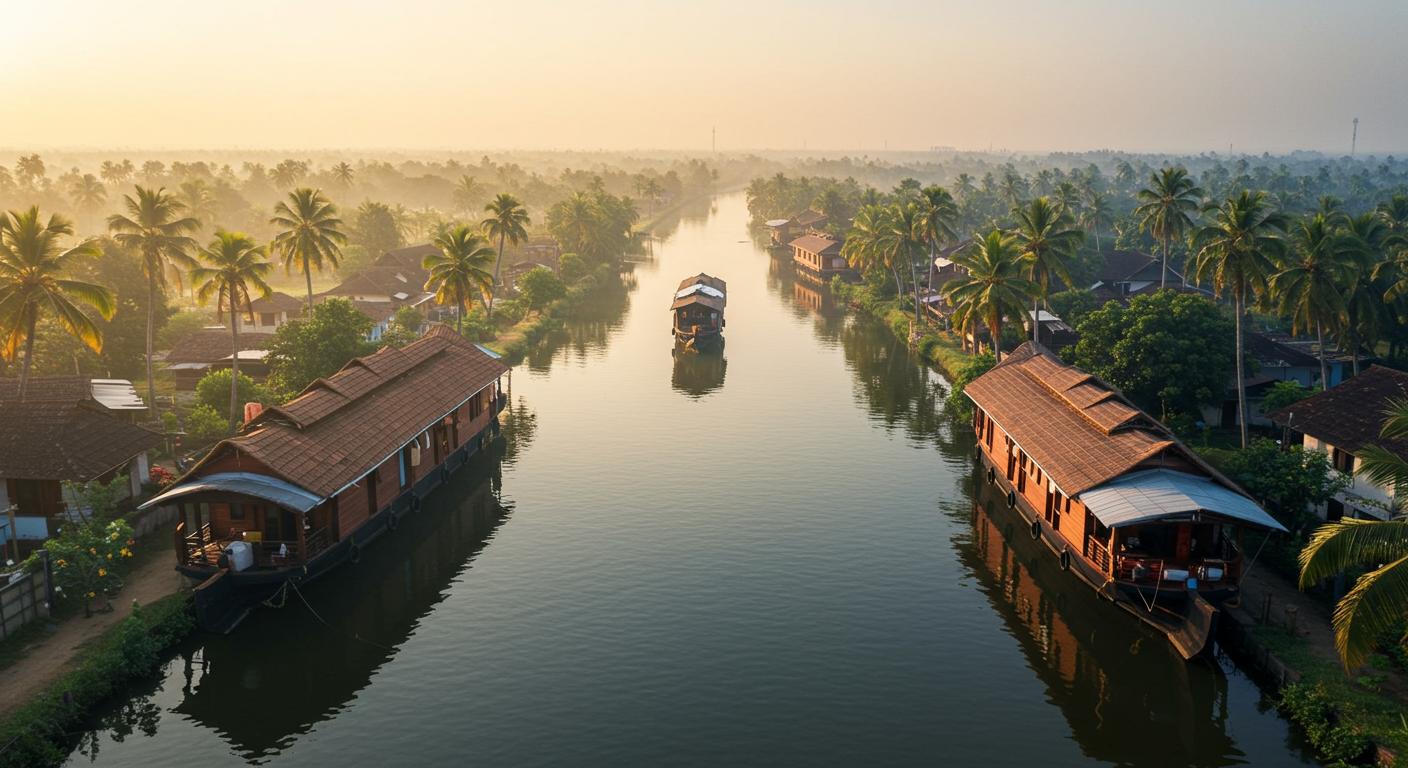
The Kerala backwaters are a network of over 900 kilometres of interconnected canals, rivers, lakes and lagoons that run along Kerala’s coastline, roughly parallel to the Arabian Sea. They stretch from Kollam in the south all the way up to Kozhikode in the north, though the most visited stretch lies between Alleppey and Kochi.
Geologically, this unique waterscape was formed by waves and coastal currents that created low, sandy barriers, called the ‘eram’, which trapped a series of lagoons and lakes behind them. Over centuries, these merged with the mouths of rivers flowing down from the Western Ghats, forming the labyrinth of waterways that travellers explore today.
The backwaters aren’t just a stunning backdrop — they’re the lifeblood of the communities that live along them. Thousands of families rely on the water for fishing, coconut husk (coir) production, rice farming and transport. Entire villages are built along the banks, with homes, schools and temples accessible only by boat or narrow footpaths.
The ecosystem is equally remarkable. Mangrove forests line many of the canals, providing a habitat for otters, turtles and an impressive range of resident and migratory birds. It’s this blend of natural beauty and living culture that makes the backwaters of Kerala India so special — you’re not just looking at scenery, you’re passing through someone’s everyday life.
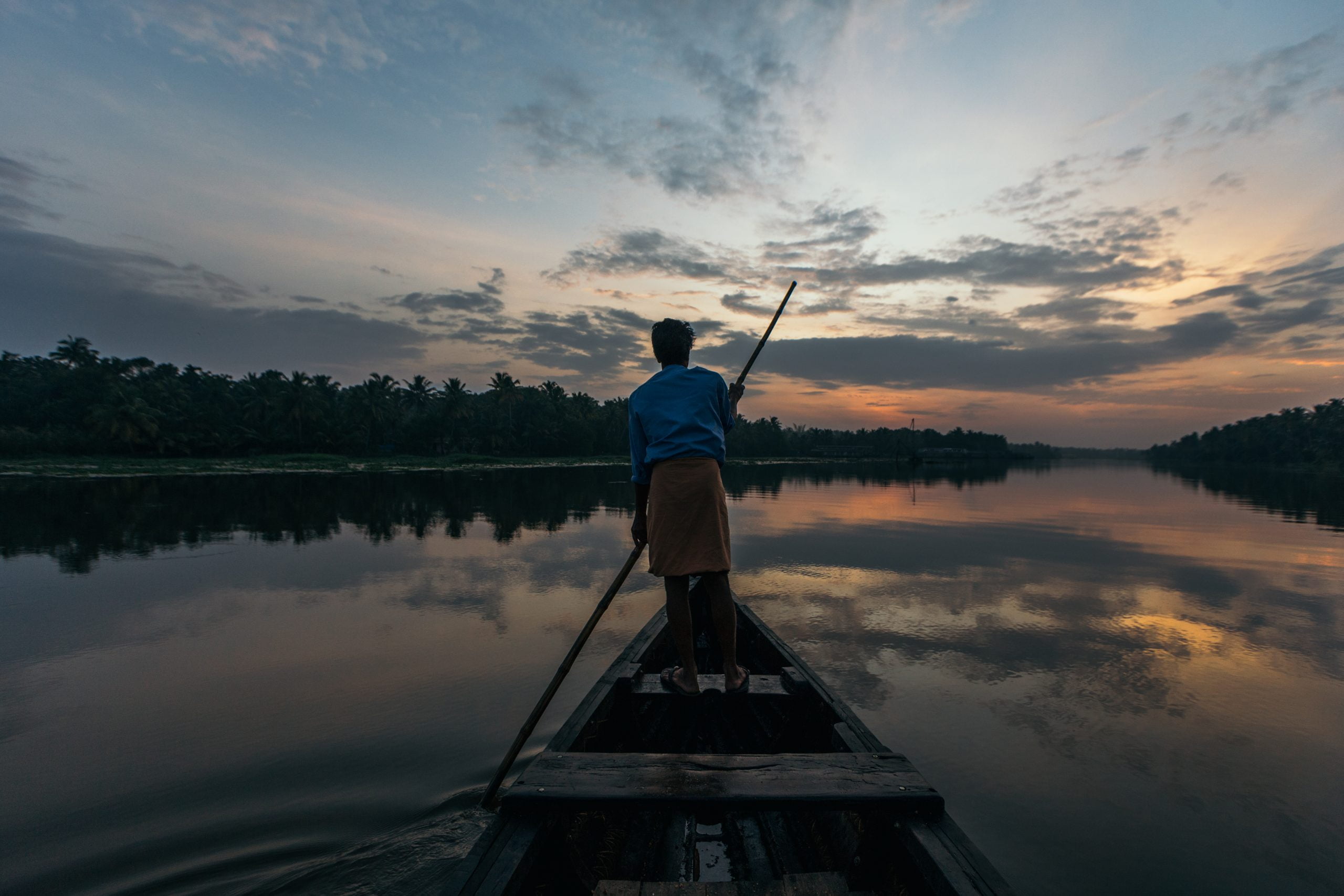
There’s no single reason people fall for the Kerala backwaters — it’s usually a combination of things.
For UK travellers used to a faster pace of life, the backwaters often become the most memorable part of a wider Kerala holidays itinerary — a place to slow right down after the buzz of Kochi or the hills of Munnar.
Not all backwater destinations are the same, and where you base yourself will shape the whole experience.
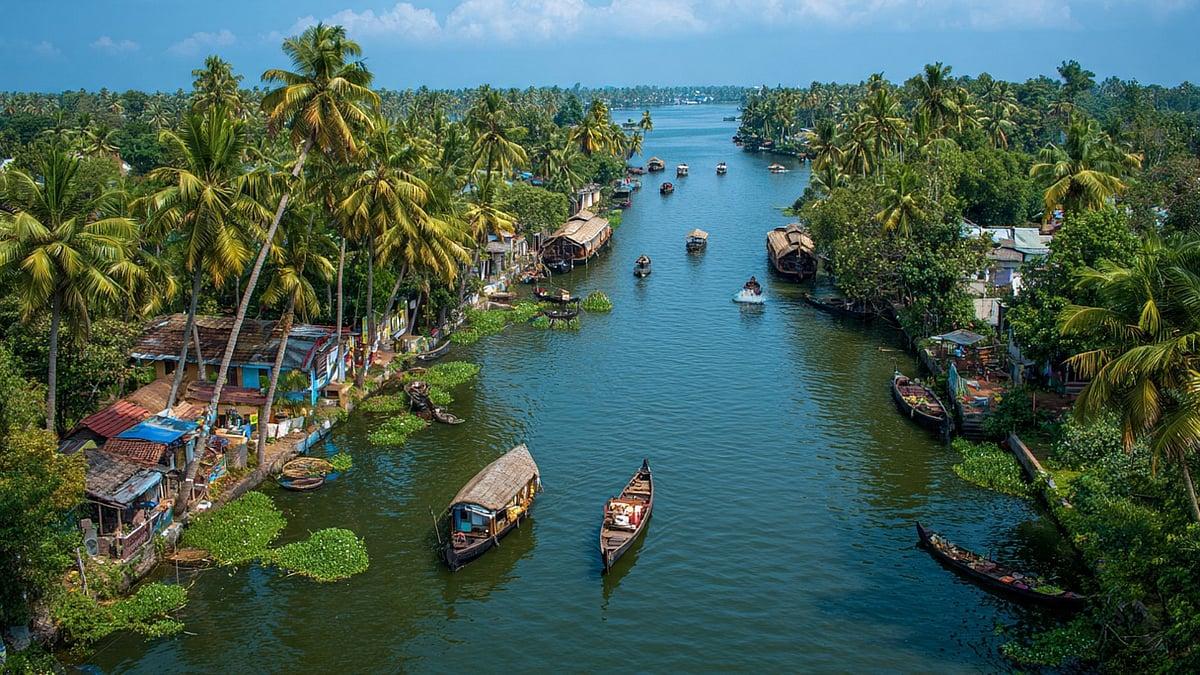
Known as the “Venice of the East”, Alleppey is the main hub of the Kerala backwaters and the most popular starting point for a houseboat cruise.
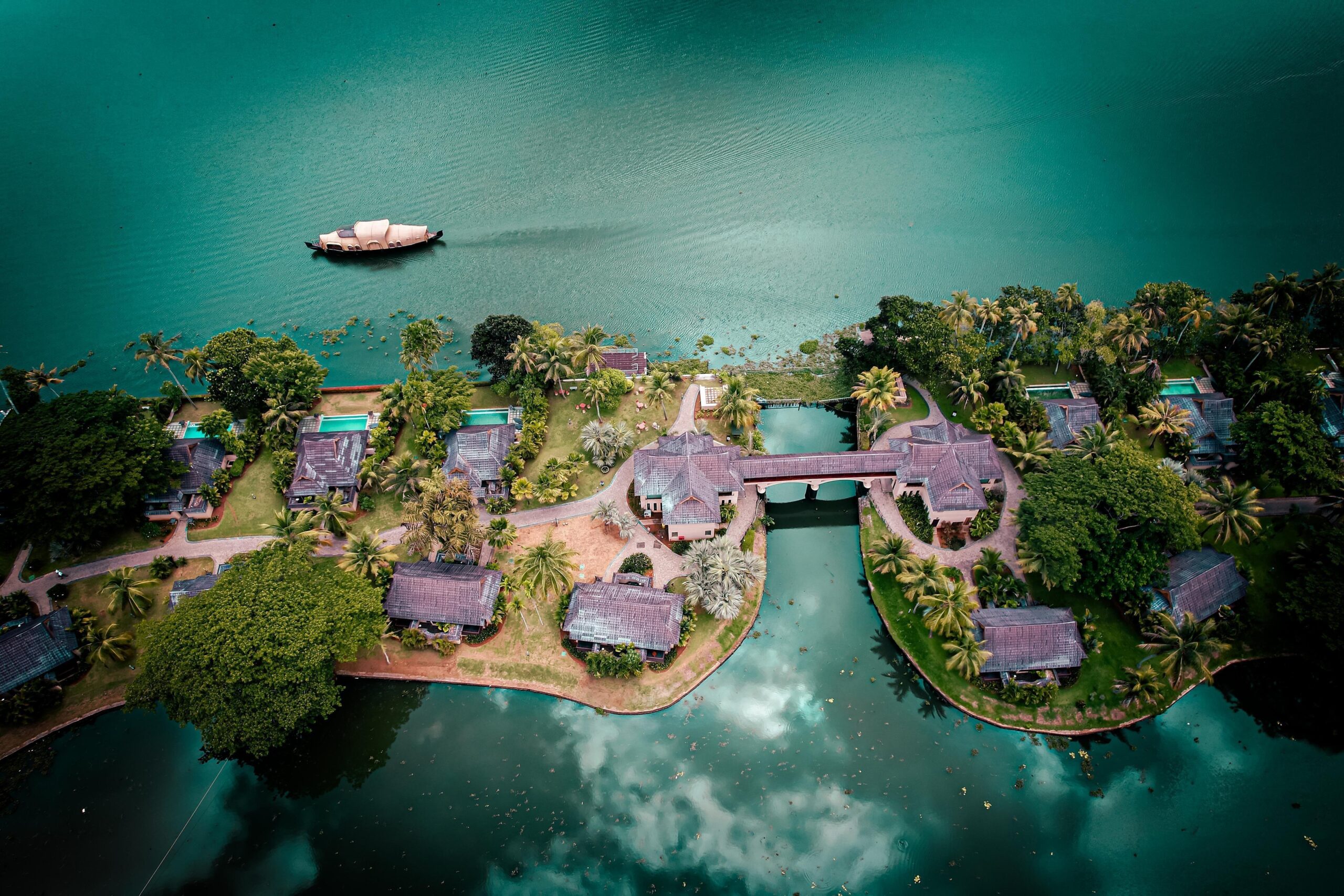
A short drive from Alleppey, Kumarakom sits on the edge of Vembanad Lake and has a quieter, more nature-focused feel.
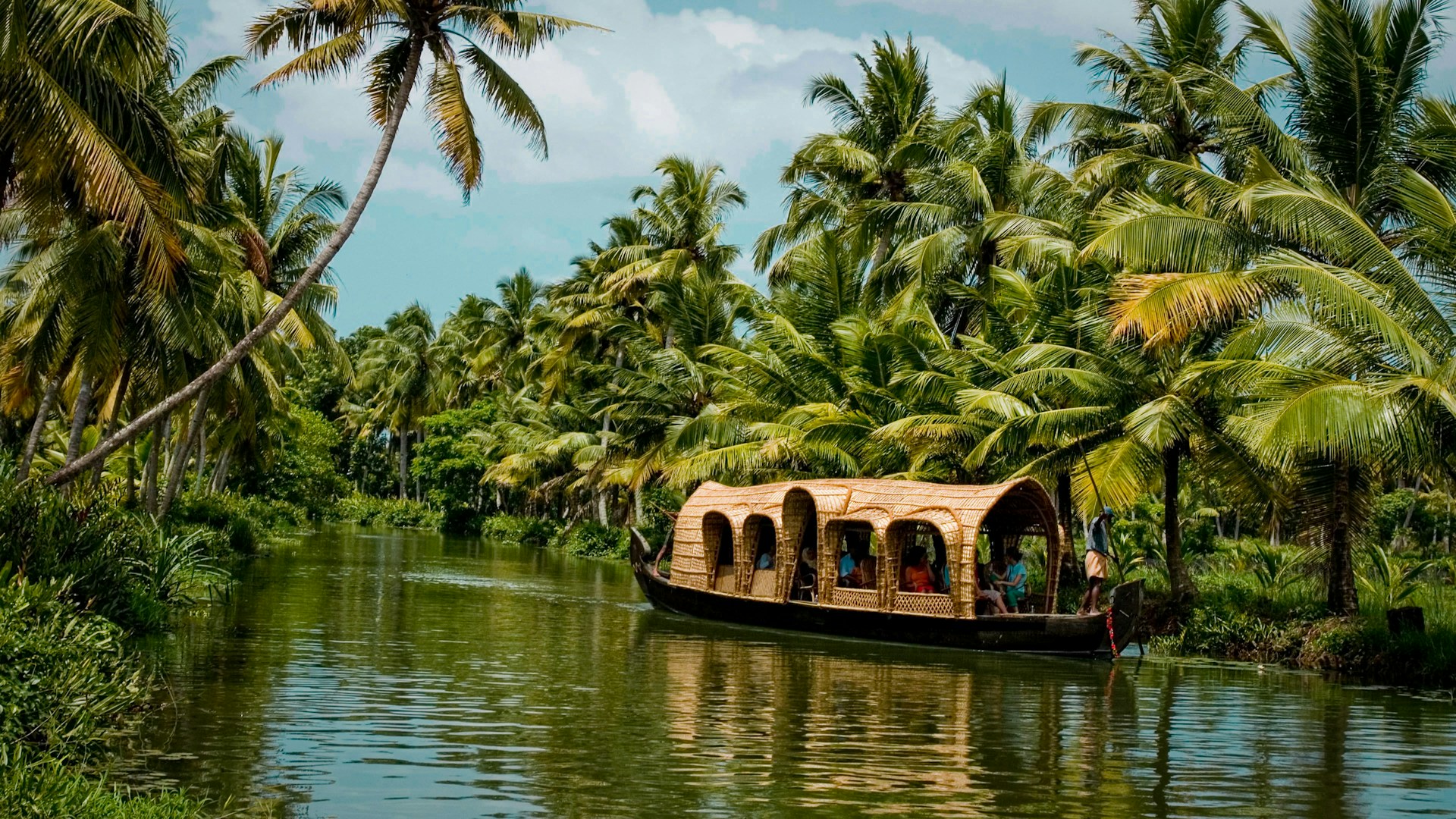
Kollam marks the southern edge of the backwaters and is far less crowded than Alleppey.
Tucked away near the very southern tip of Kerala, Poovar is where the backwaters meet the Arabian Sea.
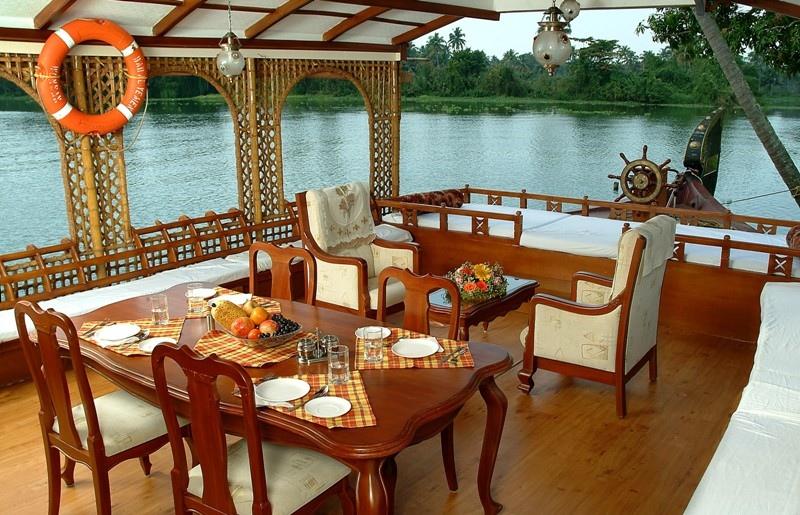
If there’s one experience that defines a trip to the Kerala backwaters, it’s stepping aboard a Kerala houseboat. These aren’t ordinary boats — they’re floating homes, and understanding your options will make a huge difference to your trip.
What is a Kerala houseboat? A Kerala houseboat, or kettuvallam, was originally used to transport rice and spices along the backwaters. The traditional kettuvallam design uses no metal nails at all — the wooden planks are held together with coir rope and coated in a black resin made from cashew nut shells. Today, these same designs have been converted into comfortable, tourist-friendly houseboats, though the traditional silhouette remains largely unchanged.
Types of houseboats Modern houseboat options range hugely, so it’s worth knowing the categories before you book:
Day cruises vs overnight stays A day cruise typically runs for 3–5 hours and includes lunch, making it a good option if you’re short on time or want a taster of the backwaters. An overnight stay, usually 22 hours from check-in to check-out, is the classic backwaters experience and includes all meals, a sunset cruise and a night moored quietly on the water.
Private vs shared boats Most Kerala houseboat bookings are private, meaning the whole boat, crew and itinerary are yours alone. Shared or “boutique” houseboats do exist and can be a cheaper way to experience an overnight cruise, though privacy is naturally reduced.
Meals onboard Nearly every cruise package includes meals cooked fresh by an onboard chef using local ingredients — think karimeen (pearl spot fish) curry, coconut-based vegetable stews, and freshly made chapatis. Most crews are happy to adjust spice levels or cater to dietary requirements if you let them know in advance.
Facilities available Expect a bedroom with an en-suite bathroom, a dining and lounge area, a shaded sun deck at the front, and a small kitchen at the rear where the crew prepares meals. Luxury boats may add extras like Wi-Fi, a private plunge pool or an upper-deck lounge.
Timing your trip well makes a real difference to comfort, cost and crowd levels.
October to March is widely considered the best time to visit the Kerala backwaters. The weather is dry, warm and pleasant, days are sunny without being oppressively hot, and this is peak season for houseboat cruises — so it’s worth booking ahead, particularly around Christmas and New Year.
Summer (April to May) brings intense heat and humidity, which can make daytime cruising uncomfortable, though air-conditioned houseboats offer some relief. Prices tend to drop and there are fewer tourists around.
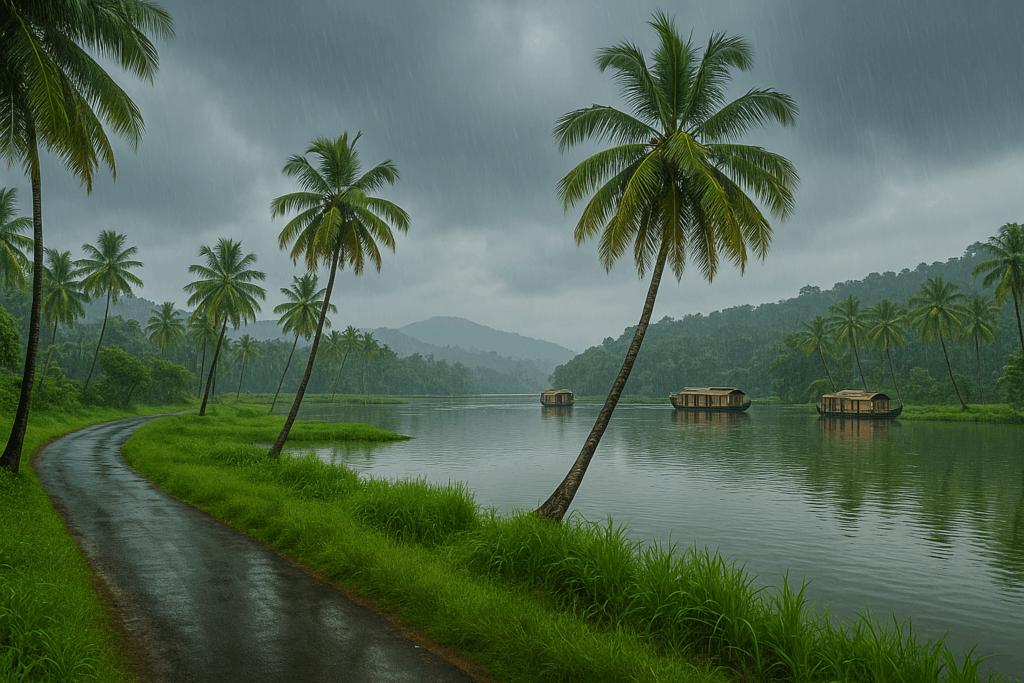
Monsoon (June to September) transforms the landscape into a lush, vivid green, and this season has its own quiet appeal for travellers who don’t mind rain. Cruises still operate, prices are noticeably lower, and it’s an increasingly popular time for those chasing Kerala’s famous Ayurvedic treatments, which are traditionally recommended during the monsoon months.
A houseboat trip is the main attraction, but there are many other ways to spend your time in the backwaters region. Combining a few of these with your houseboat stay is a great way to experience both sides of the backwaters — the leisurely cruise and the lived-in culture around it.
Yes, for most travellers a Kerala houseboat is genuinely one of the highlights of a Kerala holiday. It’s a rare chance to sleep on the water while enjoying fresh, home-cooked food and cruising past scenery you won’t see anywhere else.
One night on a houseboat is enough to experience the classic cruise, sunset and overnight mooring. If you want to combine multiple backwater towns, allow 3–4 days total.
Most overnight houseboat packages include breakfast, lunch, dinner and afternoon tea or snacks, all cooked fresh on board using local Keralan ingredients.
Alleppey has more houseboat operators, narrower canals and a livelier atmosphere, making it ideal for first-timers. Kumarakom is quieter, more nature-focused and better suited to birdwatchers or those wanting a resort stay alongside their cruise.
Yes. Reputable operators are experienced, boats move slowly, and crews are trained in basic safety procedures. It’s worth booking through a licensed operator and checking reviews before you go.
Absolutely. Many houseboats have two or more bedrooms suitable for families, and crews are generally very accommodating of children, though it’s worth confirming safety features like railings when booking.

Rakhi Bansal is a specialist travel company creating tailor-made journeys across India and the Indian subcontinent. A passionate traveller and regular contributor to the Indian Odyssey blog, she shares insights, travel inspiration, and expert advice on destinations, culture, wildlife, and authentic travel experiences.


Thank you so much for all the help and expertise you gave us in organising a great holiday. I thought of writing you a feedback while it is all still fresh in my memory. We had a truly wonderful experience this time,I must say better than last time. It really helped that we stayed in good hotels and had best room choice. The highlights in chronological order would be: Kochin sightseeing of Jew Town, Old Synagogue and Chinese nets, House Boat, Rubber plantation and lunch with the wonderful host couple. Jungle trek in Thekkady and our time in Taj Green.
Thank you so much for all the help and expertise you gave us in organising a great holiday. I thought of writing you a feedback while it is all still fresh in my memory. We had a truly wonderful experience this time,I must say better than last time. It really helped that we stayed in good hotels and had best room choice. The highlights in chronological order would be: Kochin sightseeing of Jew Town, Old Synagogue and Chinese nets, House Boat, Rubber plantation and lunch with the wonderful host couple. Jungle trek in Thekkady and our time in Taj Green.
Yes, for most travellers a Kerala houseboat is genuinely one of the highlights of a Kerala holiday. It’s a rare chance to sleep on the water while enjoying fresh, home-cooked food and cruising past scenery you won’t see anywhere else.
One night on a houseboat is enough to experience the classic cruise, sunset and overnight mooring. If you want to combine multiple backwater towns, allow 3–4 days total.
Most overnight houseboat packages include breakfast, lunch, dinner and afternoon tea or snacks, all cooked fresh on board using local Keralan ingredients.
Alleppey has more houseboat operators, narrower canals and a livelier atmosphere, making it ideal for first-timers. Kumarakom is quieter, more nature-focused and better suited to birdwatchers or those wanting a resort stay alongside their cruise.
Yes. Reputable operators are experienced, boats move slowly, and crews are trained in basic safety procedures. It’s worth booking through a licensed operator and checking reviews before you go.
Absolutely. Many houseboats have two or more bedrooms suitable for families, and crews are generally very accommodating of children, though it’s worth confirming safety features like railings when booking.
Get in touch with you for a quick chat to discuss your holiday ideas, no matter how early in your planning process you might be. It's always inspiring to discuss.