

Frequently Asked Questions
FAQs



There are a few places on earth where history doesn’t just surround you – it actively envelops you, pulls up a chair, and pours you a gin and tonic. Rajasthan is one of them. The Land of Kings has been receiving travellers with extraordinary pomp for centuries, and thanks to a remarkable luxury palace hotels in Rajasthan, that welcome has never been more refined. These aren’t hotels that happen to be in old buildings – they are former royal residences, hunting lodges, and desert fortresses that have been transformed into some of Asia’s most captivating places to stay, without losing a shred of their original grandeur.
For discerning travellers worldwide and UK travellers in particular, Rajasthan has long held a particular fascination – part imperial nostalgia, part sheer visual spectacle. The rose-pink palaces of Jaipur, the blue-washed lanes of Jodhpur, the lake-lit skyline of Udaipur – it is a part of the world that rewards those who travel slowly, stay well, and let a good guide do the talking. If you have been wondering how to get the most from a luxury Rajasthan holiday, the answer almost always involves sleeping under the same sandstone ceilings as a maharaja or two.
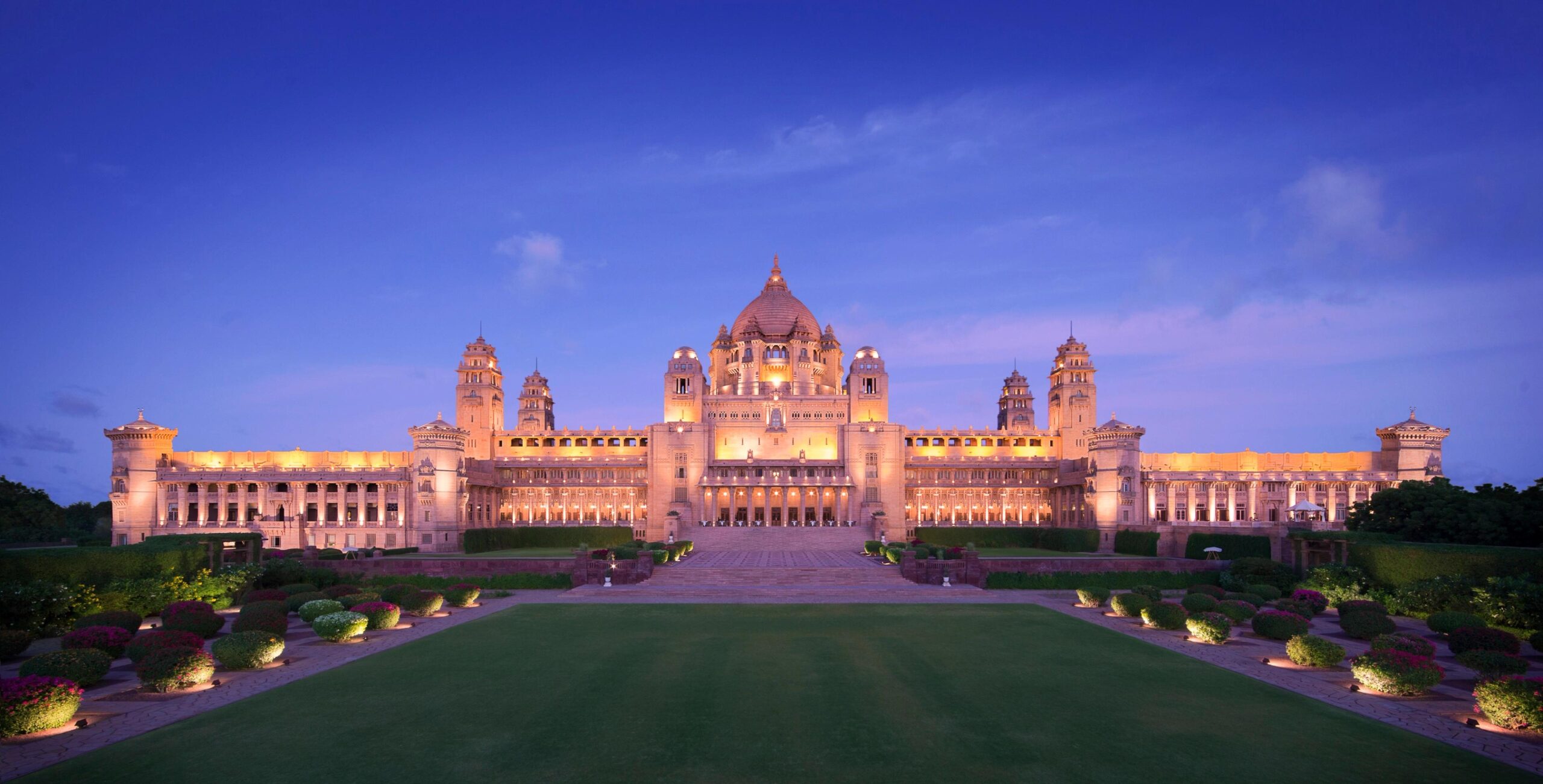
The easy answer is the architecture. Walking into a Rajasthani palace – with its filigree marble screens, painted frescos, mirrored durbar halls, and courtyards strung with marigold garlands – is an experience simply photographs cannot adequately prepare you for. The craftsmanship alone, often centuries old, tells stories that no museum ever quite manages.
But the more compelling answer is the rewarding experience one gets during the stay. Palace hotels in Rajasthan offer quality of service rooted in heritage and traditions; different from the more contemporary luxury hotel models. The concept of atithi devo bhava – the guest as god – runs deep in Rajasthani culture, and in the great palace hotels in Rajasthan, it manifests as something genuinely warm rather than merely efficient. Staff here often come from families who have served these royal households for generations. When someone carries your bags through a courtyard that was once the domain of a maharaja’s court, there is a weight of history in that moment that no amount of interior design budget can manufacture.
There is also the question of heritage preservation. Many of Rajasthan’s most extraordinary palace hotels survive because they were converted into hotels. The Taj Group, the Oberoi, IHCL, and a number of private royal families made the pragmatic decision to open their doors to paying guests in the latter half of the twentieth century – and in doing so, saved buildings that might otherwise have quietly crumbled. Staying in these properties is, in a very real sense, an act of cultural stewardship.
For those planning a Rajasthan itinerary, a palace stay also provides extraordinary access to cultural experiences that simply aren’t available elsewhere – private after-hours visits to fort interiors, cooking sessions with palace chefs, or sundowners on rooftop terraces that look out over cities that have barely changed their skylines in two hundred years.
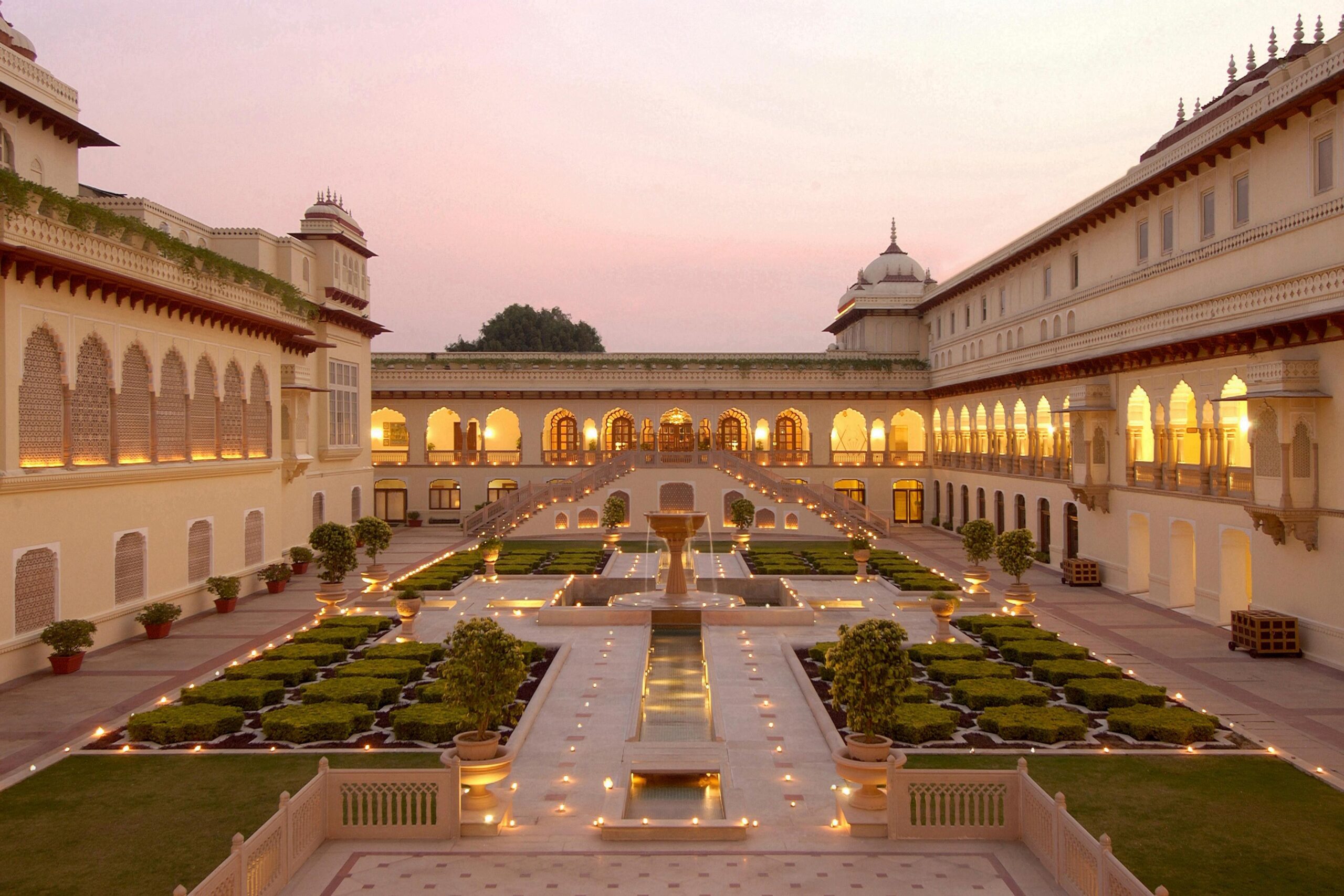
Courtyard at Taj Rambagh Palace
Once the principal residence of the royal family, Rambagh Palace Hotel in Jaipur is now operated by world renowned Taj group of hotels; and is undoubtedly most famous of all the heritage hotels in Rajasthan. Approach it at dusk, when the ochre facade catches the last of the light, and you will understand immediately why it is often described as the jewel of Jaipur.
This historic palace sits in 47 acres of manicured Mughal gardens and retains a theatrical grandeur: ballrooms with chandeliers, corridors lined with hunting trophies, and suites in which the furniture alone could furnish a decent country house. The Verandah restaurant for dining alfresco beneath fairy lights with peacocks occasionally strolling into view qualifies as an exceptional cultural experience that stays with you for years.
Best for: First-time visitors to Jaipur; travellers who want full-service luxury accommodation with history woven into every corner.
Itinerary pairing: Three nights here works beautifully, allowing time for the Amber Fort, the City Palace, Jantar Mantar, and a morning in the old city’s textile and gem markets.
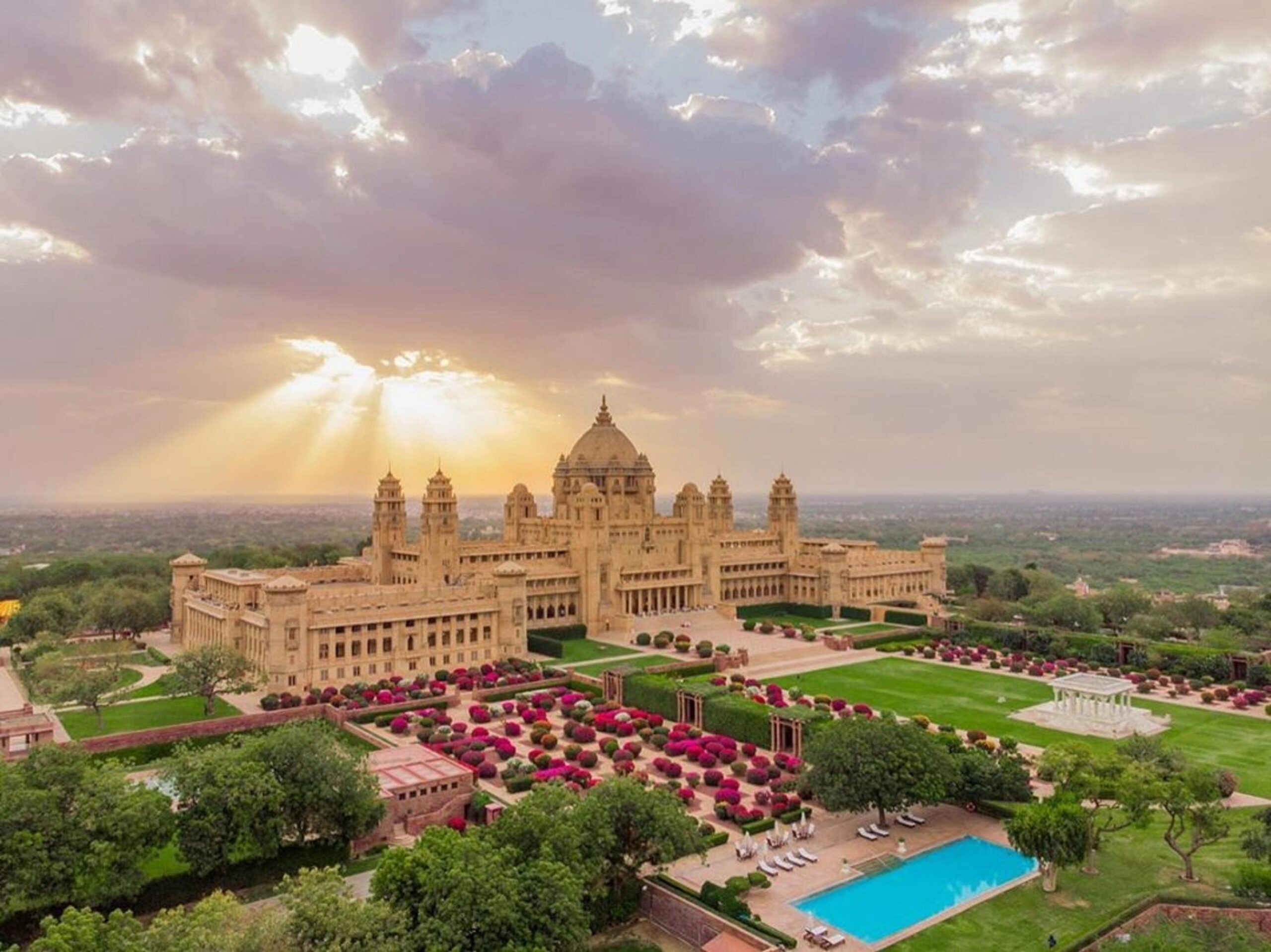
Aerial view of Umaid Bhawan Palace
One of the largest royal residences in the world, and one of the last great palaces to be built in India, Umaid Bhawan palace hotel in Jodhpur was commissioned in the 1920s partly as a famine relief project – local craftsmen and labourers were employed during a period of severe drought, and the result is a building that took fifteen years to complete and sits on a hilltop above Jodhpur like something from a particularly vivid dream.
Part of the palace is still a private home of the Jodhpur royal family; which lends the whole property an atmosphere that is rare. Rest of the palace wing is a converted hotel managed by the world renowned Taj hotel group, with suites decorated in an art deco style that reflects the era in which the palace was built.
The rooftop pool, looking out across the Blue City towards the ancient Mehrangarh Fort; offers a spectacular vista. The museum within the palace houses the history of the Jodhpur royal family through photographs, memorabilia, and an extraordinary collection of vintage automobiles. A visit to the museum is an afternoon well-spent.
Best for: Design-conscious travellers; those with a particular interest in Indian royal history; anniversary or honeymoon trips.
Itinerary pairing: Two nights in Jodhpur, with a full day exploring Mehrangarh Fort and the blue lanes of the old city of Jodhpur. The clock tower market at dusk is as vivid as any market in India.
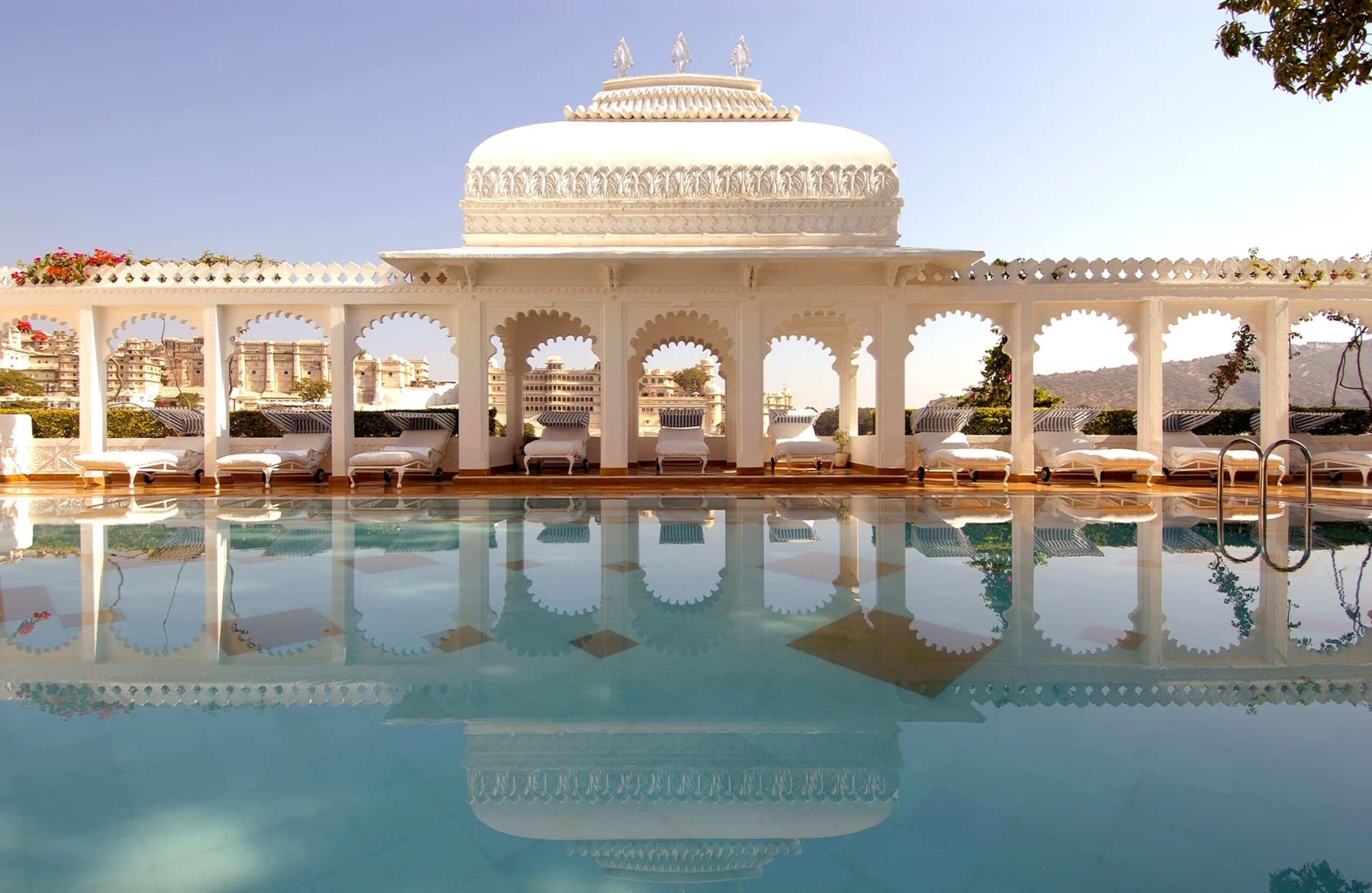
There are hotels with good views, and then there is the Taj Lake Palace hotel in Udaipur – a floating white marble fantasy rising directly from the waters of Lake Pichola, accessible only by boat, and one of the most photographed hotel in India. Fun tip for movie lovers, this hotel was also the principal location for the 1983 James Bond film Octopussy.
Stay at the Taj Lake Palace is about sheer luxury indulgence and most rewarding travel experience. The arrival by private boat as the sun drops behind the Aravalli Hills, the water shimmering around you, the white palace glowing ahead. Inside, the ninety-odd rooms and suites are dressed in rich fabrics and hand-painted tiles, each slightly different, all deeply Rajasthani in character.
The hotel’s Neel Kamal restaurant with its candlelit lakeside setting and a menu of refined Rajasthani and Mughal cuisine offers one of the finest dinner settings and requires advance booking to avoid disappointment.
Best for: Couples; honeymooners; anyone who has ever looked at a picture of Udaipur and thought yes, that.
Itinerary pairing: Three nights minimum, pairing a boat trip around the lake, a visit to the extraordinary City Palace complex, a morning at Saheliyon ki Bari, and an excursion to Eklingji temple.

Nestled in the quaint village, Samode Palace hotel in Jaipur is a 16th century palace hotel situated just an hour drive from Jaipur. The Samode royal family has owned the palace for over four hundred years, and its current generation runs this palace hotel with a warmth and personal attention that many large hotels will find difficult to replicate.
Samode Palace boasts of a unique architecture with its labyrinth of Mughal arched doorways, treelined courtyards, handprinted mural walls and Sheesh Mahal- Hall of Mirrors- where every inch of wall and ceiling covered in hand-set mirror mosaic that dates back to the seventeenth century. In candlelight, it is genuinely breathtaking. The rooftop pool, the tented dining courtyard, and the Ayurvedic spa treatments offered complete a picture of heritage hospitality at its authentic best – and make Samode one of the most cherished heritage hotels Rajasthan has to offer.
Best for: Discerning travellers who prefer intimacy over scale; those seeking something slightly off the main tourist circuit.
Itinerary pairing: Two nights as an extension of a Jaipur stay, or as part of a longer tailor-made Rajasthan holiday that builds in time away from the bigger cities.
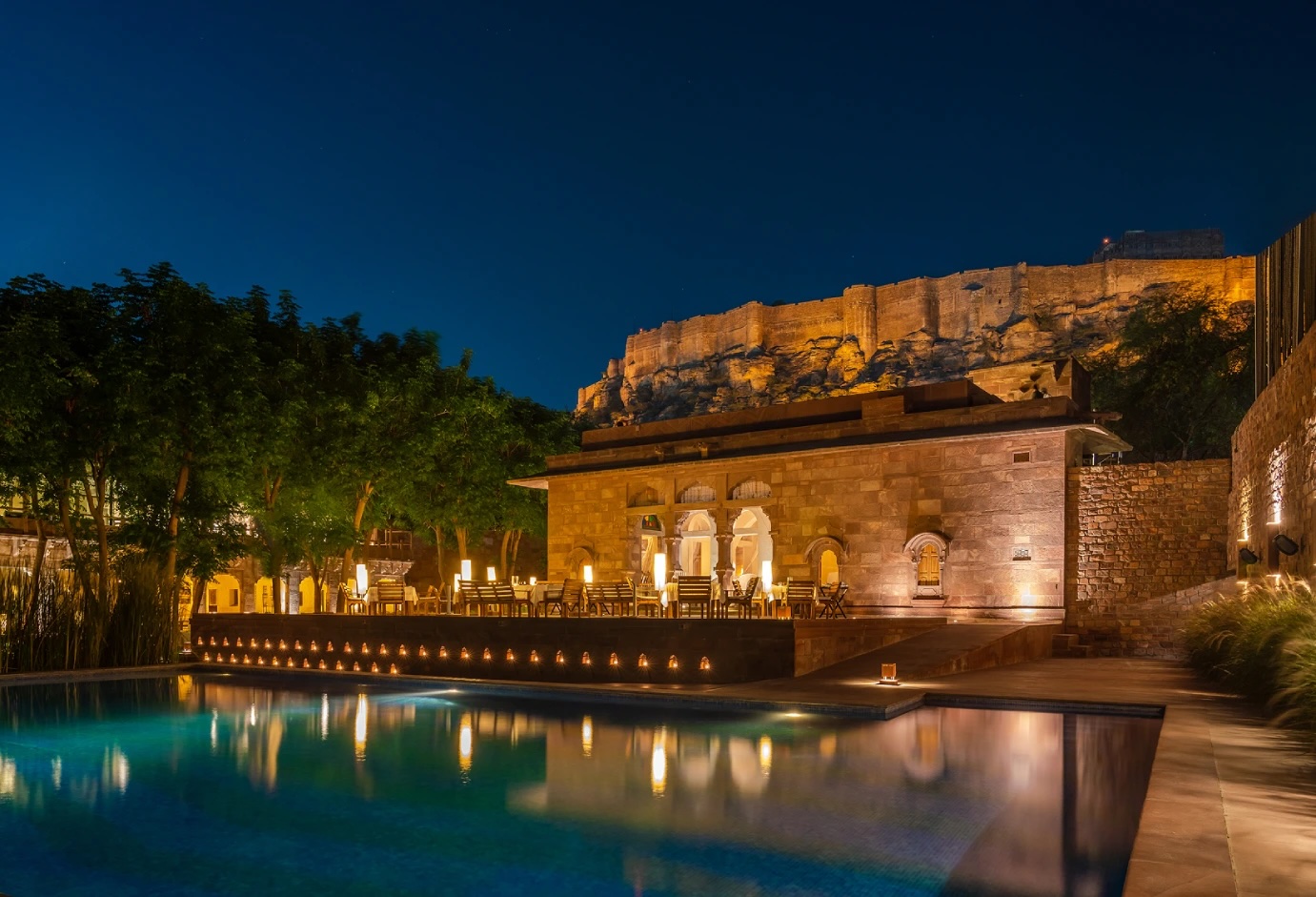
For those whose aesthetic runs more towards refined contemporary than full-blown royal opulence, RAAS Jodhpur offers something genuinely distinctive amongst the best palace hotels of Rajasthan. Built within a seventeenth-century haveli enclosure literally in the shadow of Mehrangarh Fort – the fort walls rise sheer from the property’s northern edge – RAAS hotel in Jodhpur is a boutique hotel that brings a clean, modern design sensibility to a heritage setting with considerable skill.
The rooftop restaurant, Darikhana, serves some of the most thoughtfully prepared Rajasthani cuisine available in Jodhpur, and the views of the fort are extraordinary at any time of day but especially at night, when it is illuminated in gold. The hotel’s relatively modest size means the service is attentive and personal.
Best for: Design-aware travellers; those who find over-decorated interiors slightly exhausting; food-focused visitors.
Itinerary pairing: Two nights in Jodhpur, combining with a day trip to the ancient stepwell at Abhaneri or the ghost city of Kuldhara.
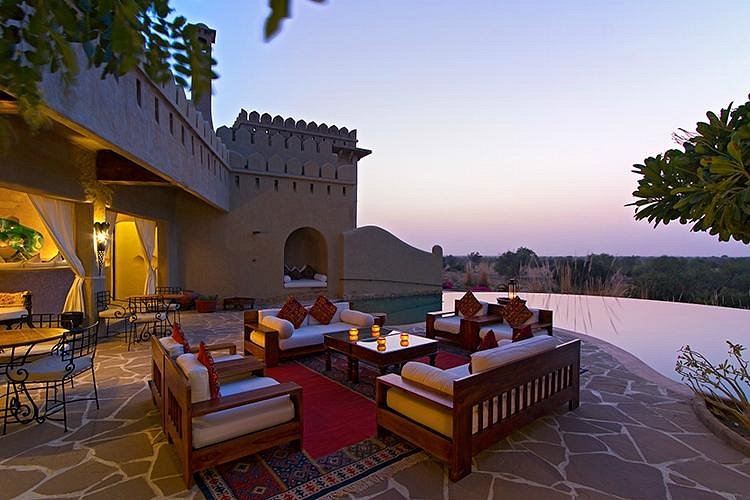
At the other end of the spectrum from Jaipur’s grand boulevard palaces, Mihir Garh hotel in Jodhpur stands alone in open desert south of the city of Jodhpur. Mihir Garh is a relatively new hotel constructed in the style of a Rajput fortress. It offers a unique extraordinary stay experience with with just nine extraordinary suites, each one handcrafted in luxury that draws on Rajasthani craft traditions: stone inlay, hand-blocked textiles, metal lacework, and terracotta tile.
This is one of the best palace hotels, Rajasthan has added to its hospitality landscape in recent decades – not a historic royal residence but a considered creation that captures the spirit of Rajasthani royal heritage with complete conviction. The absence of televisions, the inclusion of camel safaris and village visits in your stay, and the emphasis on interacting with the landscape rather than retreating from it make Mihir Garh feel unlike anywhere else.
Best for: Luxury travellers, nature and outdoor enthusiasts; those who have done the main Rajasthan circuit before and are looking for something less visited.
Itinerary pairing: Two to three nights as a desert interlude within a longer Rajasthan itinerary
If you like what you’ve read here about the best luxury palace hotels in Rajasthan India; and would like to find out more about these properties from an expert who has personally visited them or would like to discuss how to create a tailor-made Rajasthan holiday, do get in touch. We are passionate about the Indian region and travel is what we do best. We will listen, explain and answer all sorts of questions you might have and make bespoke suggestions to you for your India holiday. Whatever stage you are at in your holiday planning, the first discussions are always the most inspiring. So give us a call for a quick chat.
FAQs
October through March is the optimal window. November through February is peak season for good reason – temperatures are most comfortable, the landscape is at its most photogenic, and the major festivals fall within this period. April and September are shoulder months, with rising heat and the approaching or departing monsoon. May through August is best avoided by most travellers.
It depends on what you mean by luxurious. For sheer scale and iconic status, Rambagh Palace in Jaipur or Umaid Bhawan in Jodhpur are difficult to surpass. For romantic setting, the Taj Lake Palace in Udaipur is ideal. For intimate, handcrafted luxury in the desert, Mihir Garh, RAAS Jodhpur would be ideal. All these palace hotels combine heritage and luxury with excellent hospitality.
Undoubtedly yes – provided you are someone who finds beauty in architecture, history, and the ambience of the place. A palace stay in Rajasthan is not simply about the thread count of the sheets; it is about the cumulative effect of waking in a room where history is ornately decorative carved on walls and hospitality comes from heritage and royalty. Most travellers who have done it say it ranks among the finest luxury accommodation experiences of their lives.
For a meaningful visit covering the popular Golden triangle- Delhi, Agra Jaipur and Udaipur, allow a minimum of ten days. Fourteen days is better, particularly if you want to include extensions to Ranthambore, Deogarh, Jaiselmer or the desert near Jodhpur. A well paced Rajasthan itinerary offers a comfortable and rewarding travel experience. And that’s what we do best.
Yes – several of Rajasthan’s palace hotels remain partially inhabited by their original royal families. Umaid Bhawan Palace in Jodhpur is perhaps the most famous example, with the Maharaja’s family still in residence in one wing. Samode Palace is another, where the royal family’s continuing presence gives the property a warmth and authenticity that is immediately apparent.
It depends on what you mean by luxurious. For sheer scale and iconic status, Rambagh Palace in Jaipur or Umaid Bhawan in Jodhpur are difficult to surpass. For romantic setting, the Taj Lake Palace in Udaipur is ideal. For intimate, handcrafted luxury in the desert, Mihir Garh, RAAS Jodhpur would be ideal. All these palace hotels combine heritage and luxury with excellent hospitality.

Rakhi Bansal is a specialist travel company creating tailor-made journeys across India and the Indian subcontinent. A passionate traveller and regular contributor to the Indian Odyssey blog, she shares insights, travel inspiration, and expert advice on destinations, culture, wildlife, and authentic travel experiences.


Trip reports, stories from the region
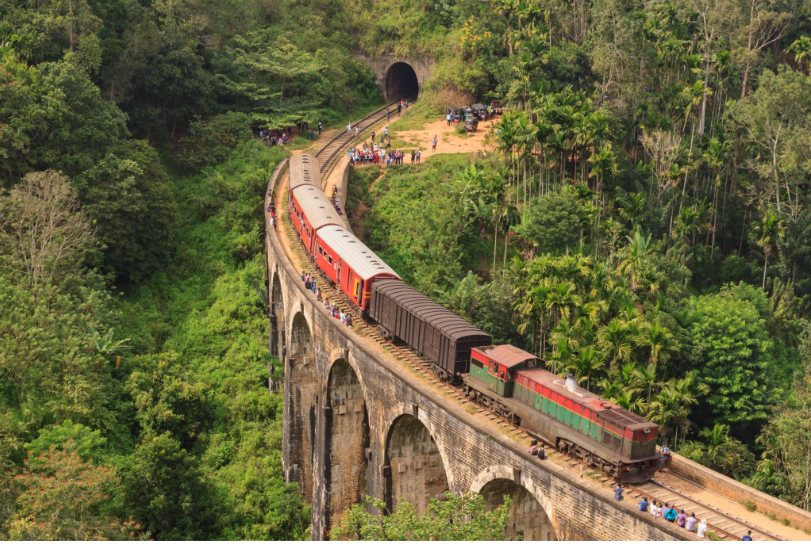 Best places to visit Sri Lanka
Best Places to Visit in Sri Lanka: Comprehensive to this extraordinary island Sri Lanka is the dream destination of every traveller today as it packs an almost impossible variety into an island smaller than Ireland. With every new place you...
Read More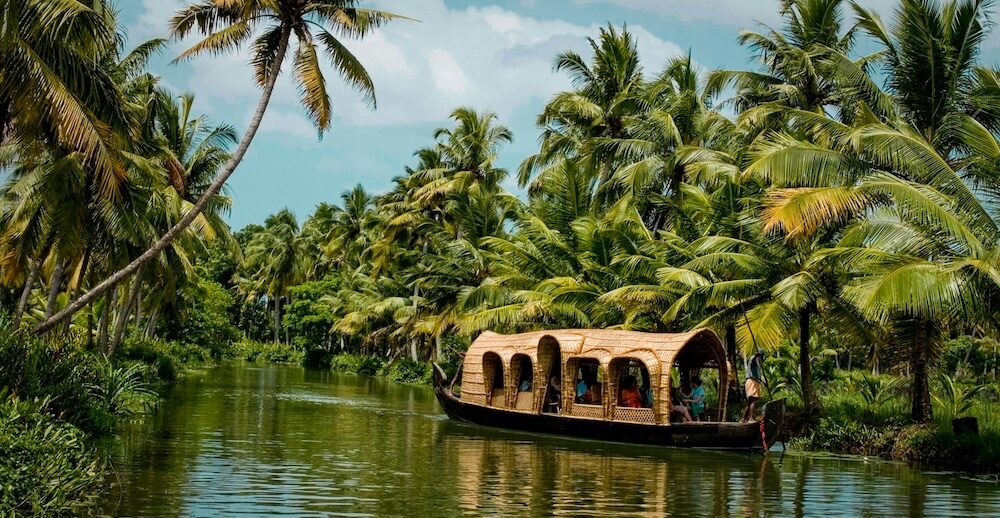 Top attractions in Kerala
Kerala is southern state of India and is popular for its unique blend of nature, culture and wellness. This makes it a perfect place for couples, family and wildlife enthusiasts. It is popularly known as “God’s Own Country,” for this...
Read More Christmas in Sri Lanka: Best Places to Visit in December
Christmas in Sri Lanka: Best Places to Visit in December Looking for a warm, unique way to spend the holidays this year? Christmas in Sri Lanka offers exactly that: sunny beaches, vibrant culture, and festive celebrations. It feels worlds away...
Read More Kovalam Beach Resorts: Your Ultimate Guide to Luxury Stays
Kovalam Beach Resorts: Your Ultimate Guide to Luxury Stays For those exploring Kovalam, a stunning beach destination in Kerala, there is a range of accommodation choices. From opulent beach resorts to authentic Ayurvedic retreats, Kovalam beach resorts cater to every...
Read More Top Reasons to visit Bhutan
Top Reasons to visit Bhutan Bhutan is best known as the last Shangrila. This Himalyan kingdom opened its doors to foreign tourism less than four decades ago. Bhutan has a strategy of ‘low volume- high quality’ tourism. For this reason,...
Read More Best Boutique Hotels in Sri Lanka
Boutique Hotels in Sri Lanka There is a wide range of hotels in this teardrop island country ranging from simple rustic character properties to best luxury boutique hotels in Sri Lanka. Whether you are luxury stay or a quirky characterful...
Read More Top 5 Cultural Indian Subcontinent Tours: India, Sri Lanka & Bhutan
Top 5 Cultural Indian Subcontinent Tours: India, Sri Lanka & Bhutan The Indian subcontinent is home to a rich, colourful culture, vibrant history, and diverse landscapes. From the Himalayas to the Arabian Sea, India, Nepal, and Bhutan make for an...
Read More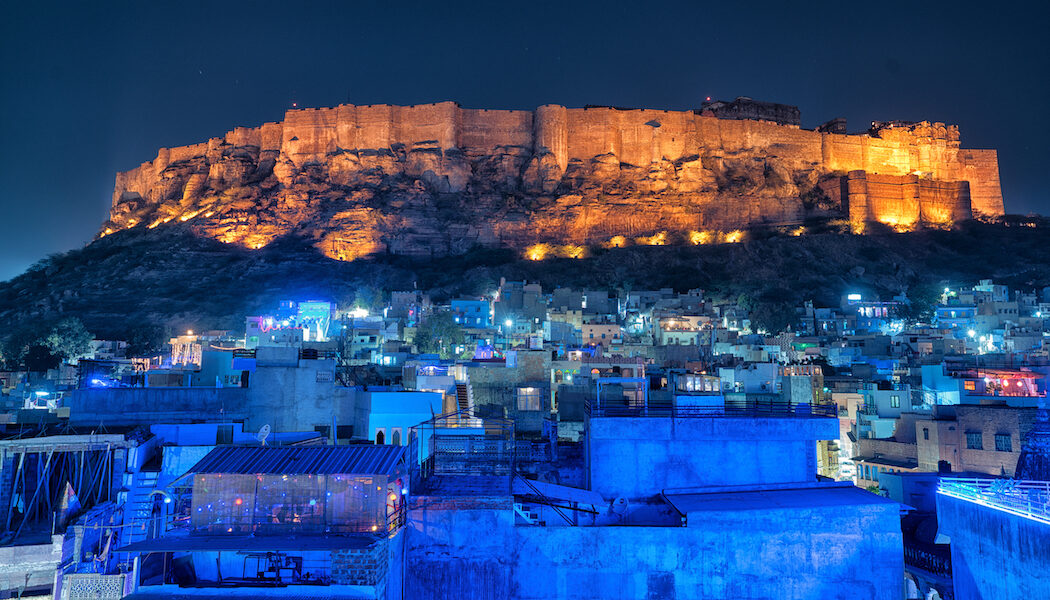 Best places to visit in India
Best places to visit in India India is packed with special features to inspire your India holidays. And there is always more to see and experience in India. Curious? Listed below are our favourite must-see holiday destinations to visit in...
Read More
Thank you so much for all the help and expertise you gave us in organising a great holiday. I thought of writing you a feedback while it is all still fresh in my memory. We had a truly wonderful experience this time,I must say better than last time. It really helped that we stayed in good hotels and had best room choice. The highlights in chronological order would be: Kochin sightseeing of Jew Town, Old Synagogue and Chinese nets, House Boat, Rubber plantation and lunch with the wonderful host couple. Jungle trek in Thekkady and our time in Taj Green.
Thank you so much for all the help and expertise you gave us in organising a great holiday. I thought of writing you a feedback while it is all still fresh in my memory. We had a truly wonderful experience this time,I must say better than last time. It really helped that we stayed in good hotels and had best room choice. The highlights in chronological order would be: Kochin sightseeing of Jew Town, Old Synagogue and Chinese nets, House Boat, Rubber plantation and lunch with the wonderful host couple. Jungle trek in Thekkady and our time in Taj Green.
FAQs
October through March is the optimal window. November through February is peak season for good reason – temperatures are most comfortable, the landscape is at its most photogenic, and the major festivals fall within this period. April and September are shoulder months, with rising heat and the approaching or departing monsoon. May through August is best avoided by most travellers.
It depends on what you mean by luxurious. For sheer scale and iconic status, Rambagh Palace in Jaipur or Umaid Bhawan in Jodhpur are difficult to surpass. For romantic setting, the Taj Lake Palace in Udaipur is ideal. For intimate, handcrafted luxury in the desert, Mihir Garh, RAAS Jodhpur would be ideal. All these palace hotels combine heritage and luxury with excellent hospitality.
Undoubtedly yes – provided you are someone who finds beauty in architecture, history, and the ambience of the place. A palace stay in Rajasthan is not simply about the thread count of the sheets; it is about the cumulative effect of waking in a room where history is ornately decorative carved on walls and hospitality comes from heritage and royalty. Most travellers who have done it say it ranks among the finest luxury accommodation experiences of their lives.
For a meaningful visit covering the popular Golden triangle- Delhi, Agra Jaipur and Udaipur, allow a minimum of ten days. Fourteen days is better, particularly if you want to include extensions to Ranthambore, Deogarh, Jaiselmer or the desert near Jodhpur. A well paced Rajasthan itinerary offers a comfortable and rewarding travel experience. And that’s what we do best.
Yes – several of Rajasthan’s palace hotels remain partially inhabited by their original royal families. Umaid Bhawan Palace in Jodhpur is perhaps the most famous example, with the Maharaja’s family still in residence in one wing. Samode Palace is another, where the royal family’s continuing presence gives the property a warmth and authenticity that is immediately apparent.
It depends on what you mean by luxurious. For sheer scale and iconic status, Rambagh Palace in Jaipur or Umaid Bhawan in Jodhpur are difficult to surpass. For romantic setting, the Taj Lake Palace in Udaipur is ideal. For intimate, handcrafted luxury in the desert, Mihir Garh, RAAS Jodhpur would be ideal. All these palace hotels combine heritage and luxury with excellent hospitality.
Get in touch with you for a quick chat to discuss your holiday ideas, no matter how early in your planning process you might be. It's always inspiring to discuss.